
“Somos una sola ciudad”
Discurso preparado para la sesión de investidura del Concejo Municipal de 2026, el 7 de enero de 2026
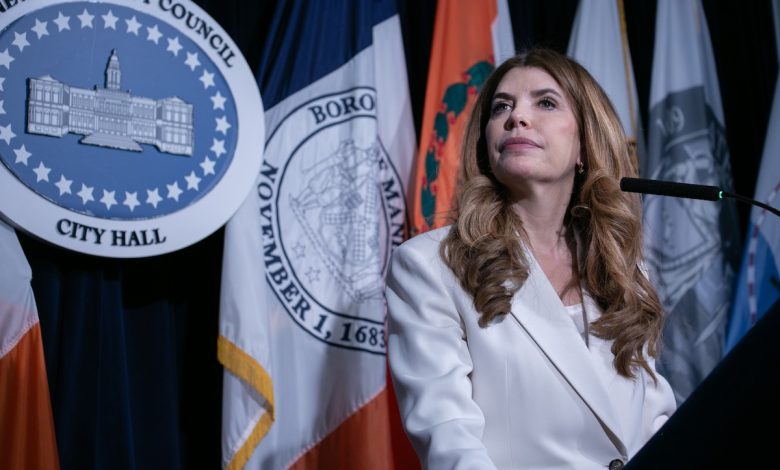
“We are one city”
Remarks prepared for delivery at the 2026 City Council Charter Meeting on January 7
By Julie Menin
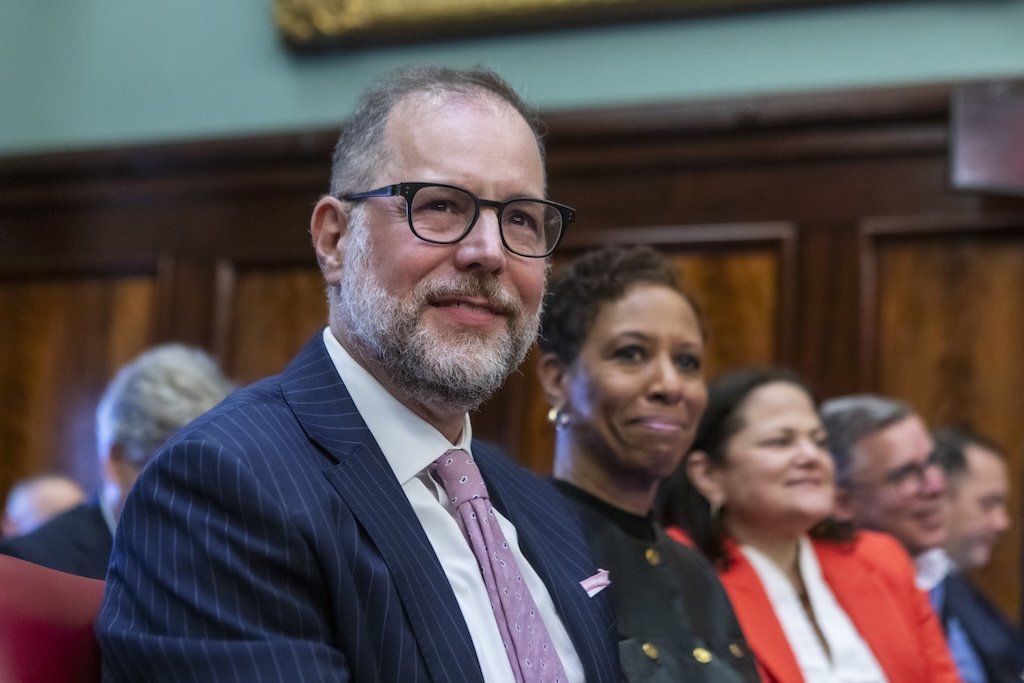
Photos: NYC Council Media Unit
Thank you everyone.
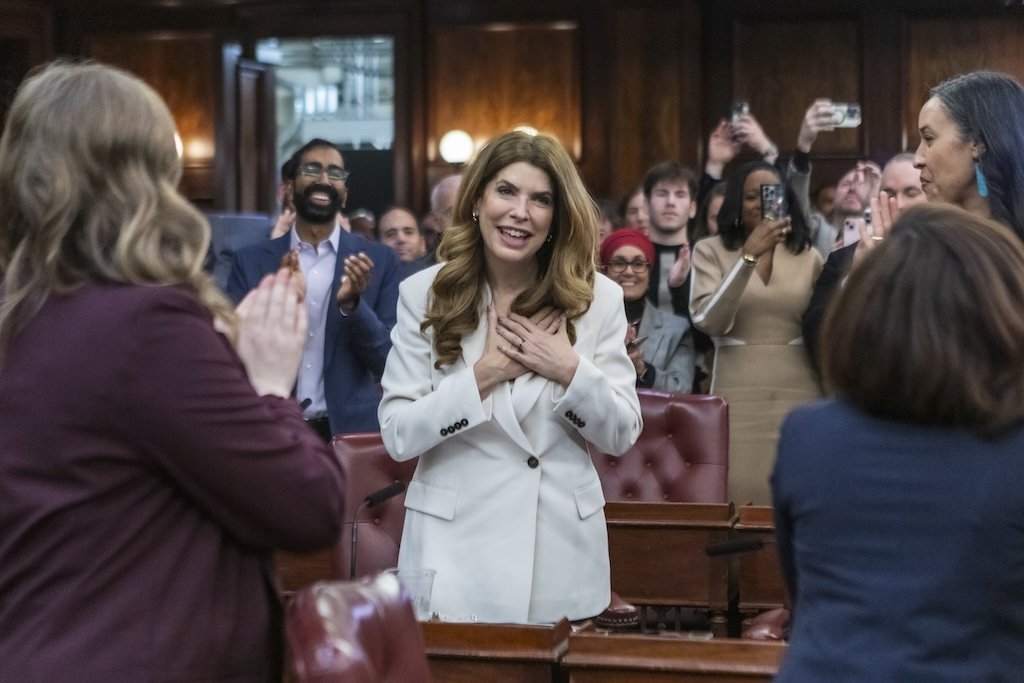
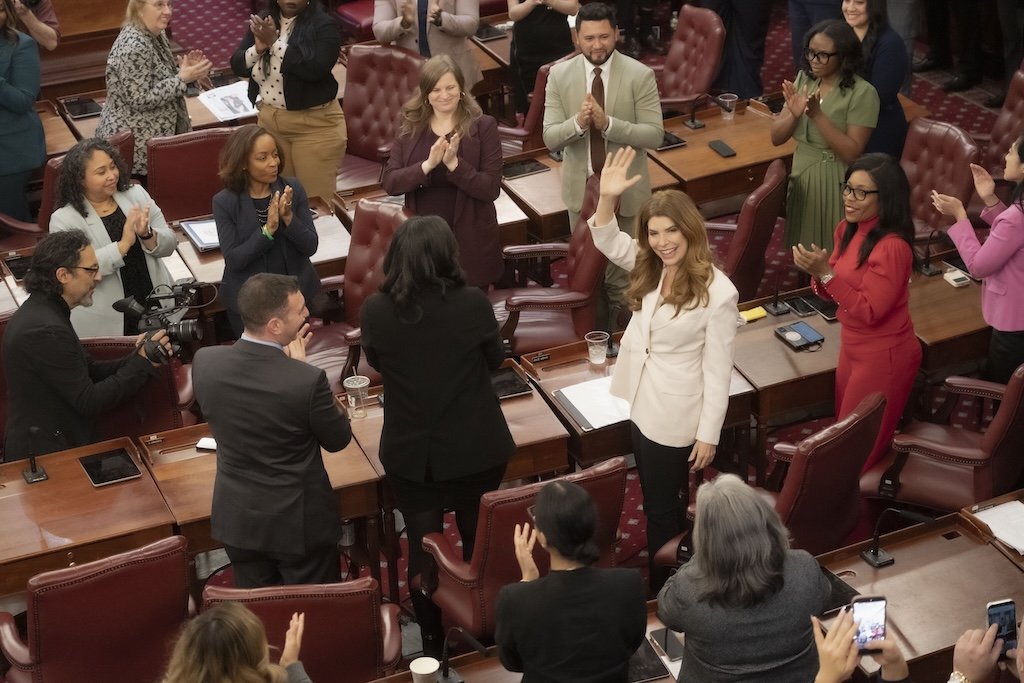
Words truly cannot describe the tremendous gratitude I feel for my incredible colleagues. I am humbled by the faith, trust, and confidence you have placed in me. And I pledge to be a Speaker for every single member of this Council.
I want to start by recognizing some of the honored guests who are here with us in the room today including: Former Speakers of the City Council: Speaker Adrienne Adams, Speaker Corey Johnson, Speaker Melissa Mark-Viverito, and Speaker Gifford Miller.
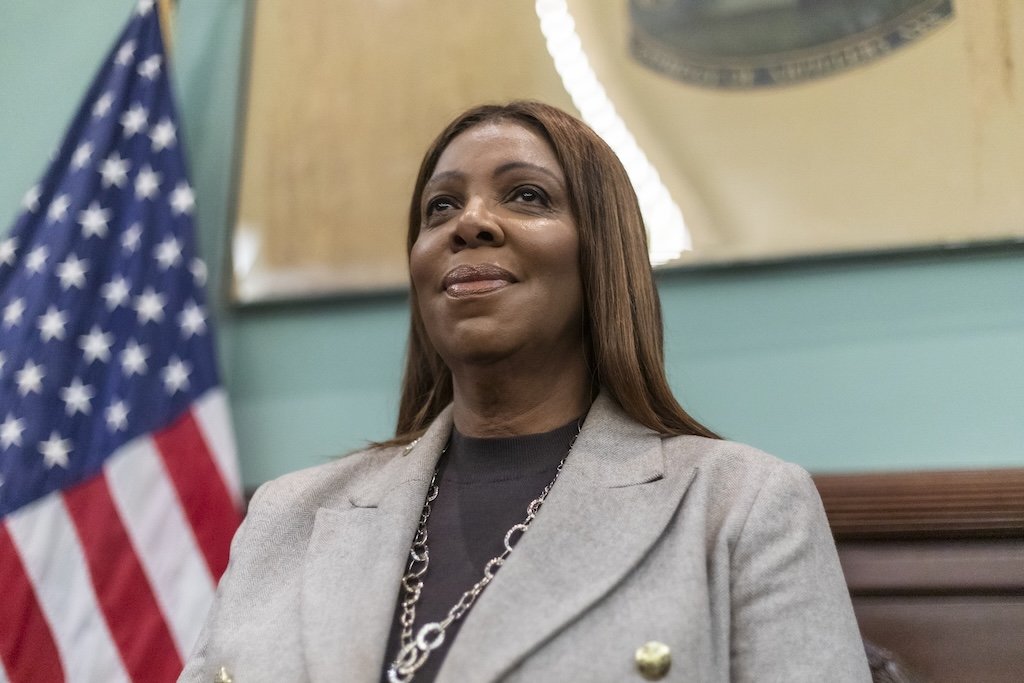
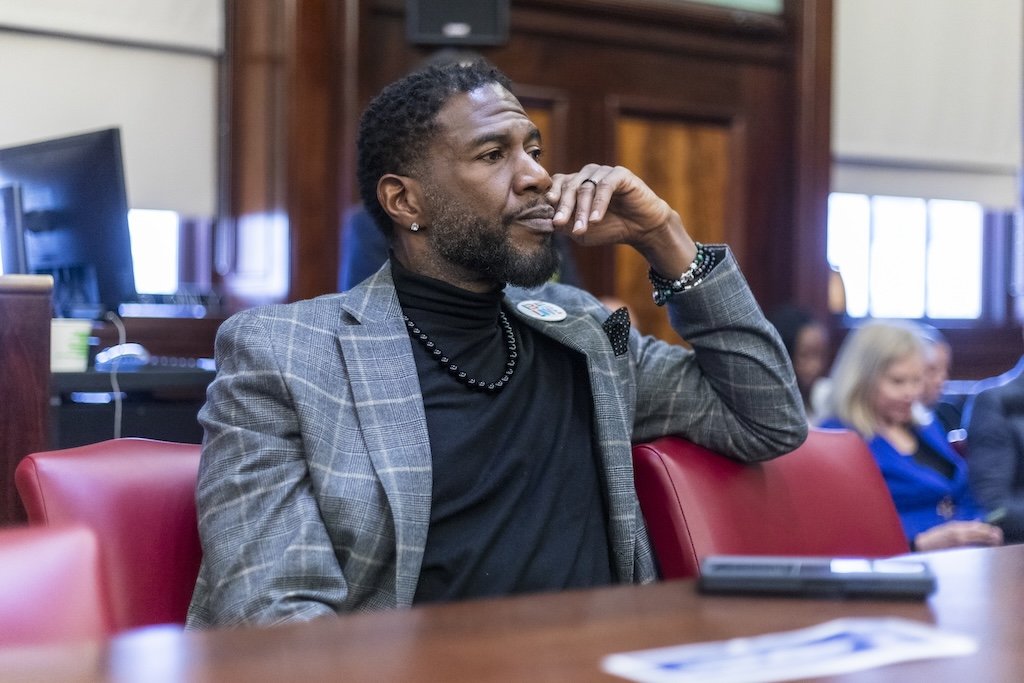
Thank you for joining us today: NYS Attorney General Tish James, NYC Public Advocate Jumaane Williams, and our new Comptroller Mark Levine. From our new administration, First Deputy Mayor Dean Fuleihan and Director of Intergovernmental Affairs Jahmila Edwards.
We have been joined by Bronx Borough President Vanessa L. Gibson, Manhattan Borough President Brad Hoylman-Sigal, Former Bronx Borough President Rubén Diaz Jr., and NYS State Senator Sam Sutton.
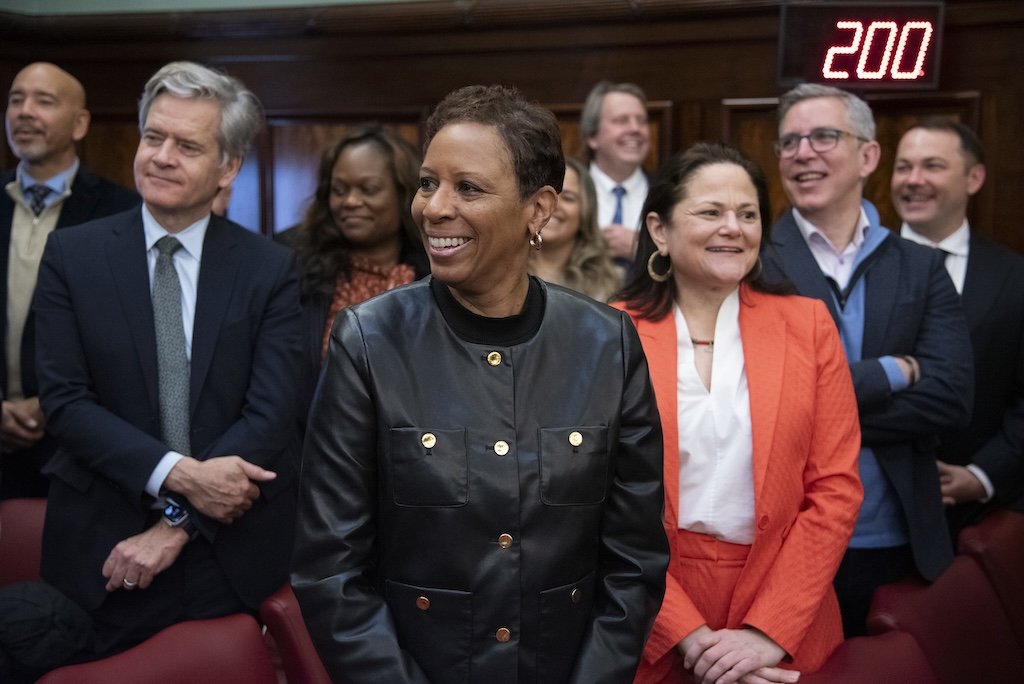
I now want to thank our friends in labor who have supported us for all these years. President of the Hotel and Gaming Trades Council, Rich Maroko; President of SEIU Local 32BJ, Manny Pastreich; President of the UFT, Michael Mulgrew; Executive Director of the DC37, Henry Garrido; President of the AFT, Randi Weingarten; President RWDSU, Stuart Applebaum; and President of NY Central Labor Council, Brendan Griffith. And we are also joined by the District Council of Carpenters.
And some of the individuals who are not able to be here today but have been so amazing throughout this entire process:
With Washington and Albany in session, Queens County Democratic Chairman, Congressman Gregory Meeks, and Bronx County Democratic Chairman, State Senator Jamaal Bailey are not able to be here. But they are represented by Frank Bolz, Counsel to the Queens County Democratic Party, and Ariana Collado, Executive Director of the Bronx Democratic Party.
We are joined by Brooklyn County Democratic Chairwoman, NYS Assembly Member Rodyense Bichotte Hermelyn.
And I am so proud that we are also joined by: Former City Councilmember Keith Powers, Mark Weprin, Mark Treyger, and former Congressmember Carolyn Maloney.
I want to extend a special thank you to the members who ran spirited campaigns for Speaker — Crystal Hudson, Chris Marte, Selvena Brooks-Powers, and Amanda Farías. You all ran races of integrity, and I look forward to working with you in the coming years.
And finally, I want to thank my family.
I know I am here today in great part because of the paths that every member blazed not just for the City Council, but for women in leadership — especially with this historic, majority-women Council.
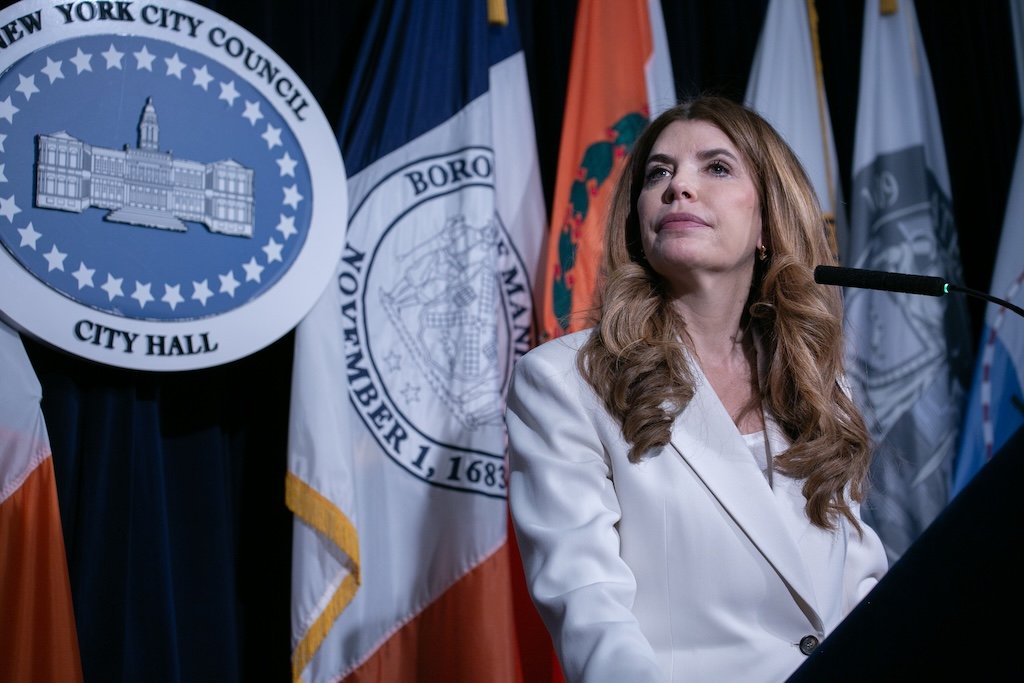
And I have had no greater professional honor in my life than to stand before you as Speaker.
When I think about what that honor means, I think about what brought me to this moment, and what brought all of us here today: It is the story of America, which is the story of New York — and that is the story of immigrants.
Right now, we gather at City Hall, but mere blocks away is where that story starts: By the shoreline of Battery Park.
It is the place where land meets the water and history meets the present. The place where newcomers became New Yorkers, and where immigrants came to seek a better life. Because they came here with hope — hope that this city, and this country, could give them a chance to achieve the American dream.
In the early 1950s, two of those immigrants were my mother and grandmother. Yet their journey to the land of the free was far from a timid one. They both survived the Holocaust in Hungary by hiding in a cellar. But my grandfather was murdered solely for being Jewish.
After the war ended, my mother and grandmother stayed in Hungary — but even this new chapter did not lead them into a world of freedom. When the Soviets took over, they sealed the borders — and with mines along the fences, there was no way out. But my grandmother was fearless, and in the middle of the night, thanks to the compassion of a stranger, she took my mother and escaped to Czechoslovakia.
Europe was still no friendly place for Jews, and the only country that would take them in was Australia. But after living in Sydney for six years, they finally fulfilled their dream to come to New York. When they arrived, they settled into a rent-controlled apartment in little Hungary with little more than that newly American hope — and the stubborn refusal to give it up.
The East Side of Manhattan was a community that welcomed my family with open arms, A community that gave them a better life after the horrors they had been through. And with the beauty of life bringing things full circle, it is now a community that I have the true privilege of representing.
This is the story of so many New Yorkers — it’s Dominican families in Washington Heights, and Mexican families in Sunset Park, opening doors to their homes and small businesses to new arrivals.
It’s Haitian households in Flatbush and Canarsie embracing those fleeing instability, and Caribbean communities in Crown Heights and East New York extending the same support they once received.
It’s Polish families in Greenpoint and Ridgewood helping the next generation find their footing, and Chinese families in Flushing supporting them through family networks and local shops.
It’s South Asian families in Jackson Heights and Richmond Hill welcoming newcomers with opportunity, and West African families in the Bronx and Staten Island building communities rooted in faith, work, and mutual care.
Now, I want to personally say that I never thought of myself as a politician, and never imagined I would run for office when I first engaged in public service. In fact, after practicing law for seven years, I left the legal profession to open up a small business — a restaurant in lower Manhattan.
But when 9/11 happened, it changed everything. Both my restaurant and my home at the time were located just a few blocks from Ground Zero. My husband Bruce was supposed to be at the World Trade Center that fateful morning, but unbeknownst to me he had moved the location of his meeting at the last minute. My mother, who lived with us, had gone to a doctor’s appointment earlier that day, and I couldn’t find her until later that afternoon.
Thankfully, our family was ok. But my small business had been decimated — with every window blown out, with broken glass everywhere, and with carcinogenic ash covering every inch of the place.
When insurance carriers took out full-page advertisements in all the local papers, they promised New Yorkers they were in our corner. And when insurance carriers gave us small business owners a mere five days of business interruption payments — despite us being in the frozen zone for months — they broke that promise.
But that broken promise forged a new one within me — a promise to take on large corporations that engaged in predatory conduct.
While the windows of my restaurant were shattered, our spirit of resilience was anything but. After founding a non-profit to restore the vibrancy and vitality of Lower Manhattan, growing it to 30,000 members, I ended up chairing the Community Board for seven years. From programs like Art Downtown and Music Downtown, to building new schools and the WTC Performing Arts Center, to helping over 600 small businesses stay in the community, we planted the seeds for Lower Manhattan’s revival at a time when people doubted our ability to rebuild.
But our city also faced another distressing issue in the wake of 9/11: the deplorable surge of Islamophobia. When the construction of an Islamic cultural center was proposed near Ground Zero — a center to foster dialogue and unity — people fiercely opposed it. And that shameful opposition sent a signal to Muslim New Yorkers that they did not belong in a city that is meant to welcome everyone. When their freedom of religion was protested in public, we could not stand by in silence.
Along with Daisy Khan, who proposed the project — and whom I’m honored is here with us today — we stood up to champion the rights of every New Yorker. Despite the death threats I received — not for a week, not for a month, but for over a year — we did not waver in our support of this project. So as chair of the community board, I was proud to write the resolution and guide my members to vote overwhelmingly in favor of the Islamic cultural center and mosque.
Sadly, that surge we saw over twenty years ago is not unlike the atmosphere we are currently experiencing. Hatred and violence are running rampant across our country and around the world — from the horrific shooting at Brown University, to the antisemitic terror attack at Bondi Beach in Sydney. But we must ensure that New York continues to serve as a beacon of hope, tolerance, and inclusion.
We live in a day when the first Muslim mayor of New York City, and the first Jewish Speaker of this Council, are serving at the same time. This moment truly is historic. But what will write this interfaith leadership into the history books is if it can act as an opportunity for all of us to come together — to calm tensions, to bridge divides, and to recognize we are one city, no matter the religion we practice or the language we speak.
Building that Islamic cultural center meant upholding the dignity that every New Yorker deserves, and for the past four years in the City Council, it has been an honor striving to do that with you all in so many ways.
For the past four years, we have worked to build more affordable housing in every single borough. We have worked to combat antisemitism through education, launching a program to bring every 8th-grade public school student to the Museum of Jewish Heritage. We have worked to address issues around health disparities and maternal mortality. And we have worked to take the first steps to enact universal childcare — and by working with the Mayor and Governor, we can truly make it a reality.
But now, we all have an exceptional opportunity to take the Council into a new era. A proactive era. An era of initiative and ingenuity.
Rather than simply wait to react to ULURPS, we as a Council will release our own affordable housing plan by looking at the 215 public library branches we can use. And we are going to study the 1,000 DCAS under-utilized and city-owned assets that we can convert into affordable housing for New Yorkers who need them.
As a Council, we must make it easier for our small businesses to operate by slashing fines and cutting red tape. And we must tackle skyrocketing healthcare costs because medical debt is the leading cause of financial burden. Why should a woman giving birth by c-section pay $55,000 at one NYC hospital, and $17,000 at another two blocks away? It shouldn’t — and we will use the new Healthcare Accountability office to lower exorbitant healthcare costs once and for all.
As a Council, we must confront the culture of fraud, abuse, and corruption that has plagued City Hall, and enact procurement reform to end no-bid contracts that have cost our city billions. We have to ensure city services are functioning at the highest levels, and restore the enormous staff vacancies that have gutted our agencies.
We must counter income inequality with historic investments in baby bonds and universal college savings accounts — because ongoing education, whether it be vocational school or community college, can lead to double the wages earned in one’s lifetime.
In certain parts of the city, our immigrant communities are facing an increasingly hostile environment. And as a Council, we must work to ensure that every family feels safe enough to put down roots in their neighborhoods — roots which strengthen the structure, shape the culture, and provide the vibrancy of the five boroughs.
But as your Speaker, I want to anchor our vision of leadership in the story of our city — a vision as hopeful of the immigrants who come here, and as persistent as the spirit that drove them here. The waves of immigrants that arrived on our shores created waves of change that forever altered the fabric of our history. They brought new perspectives and ideas. They brought new solutions to old problems and new people to solve them — and they still do.
As the first Jewish Speaker, I want my vision of leadership to be as focused on dissolving division as it is on uniting all coalitions. And most of all, I want to be a Speaker for every single member of this council. Because I know the fight to create a safer, stronger, and more affordable New York is not won alone — and we need to work together to make the greatest city in the world even greater.
As a body of 51 individuals, the legislation that is most life-changing and forward-thinking comes from the collection of policies to which all of us contribute. Our city has flourished because our foundation wasn’t built on simplistic paradigms — and because of our ability to hold two truths that may seem mutually exclusive, but are, in fact, mutually reinforcing.
For instance, our city needs meaningful criminal justice reform, and at the same time, we must have the requisite resources for robust public safety measures. Our city needs to attract new businesses, and at the same time, we must have the strongest worker protections in the country. And our city needs to protect the First Amendment right to peacefully protest, and at the same time, we must never jeopardize a New Yorker’s right to worship — because we cannot let what happened outside Park East synagogue ever happen again, at any house of worship.
To me, this especially hits home. Our faith is about our family. Now, I know I said earlier that being elected Speaker is the greatest professional honor of my life, but I’ll happily admit that being a mom will always remain the role that is most important to me. As a mother of four, my children give me a lot of love, pride, and joy, but they also give me a lot of ideas. And as I was speaking to them about what I should say today, they continued to deliver.
One of the ideas my seven-year-old daughter proposed was a law that social media should only be used to show nice things, like baking cakes, or cute stuffed animals. Hard to disagree with her on that one. But then she said something else. She said we should pass a law that when you cross the street, we must all smile at each other.
At first, her idea made me smile. But in the next instant, it sent me back more than twenty years. I thought of the days right after 9/11 — and how we all had a little more love, a little more patience for one another. Or, how during Covid, we all checked in with each other, looked out for one another. How in the worst of times, we still had the capacity to give our best. And we still do.
It shouldn’t take childlike exuberance, or a tragedy, or even the memory of one to forge compassion within us.
It shouldn’t take retelling the story of New York to remind ourselves that immigrants in every decade built and rebuilt this city. But when we do, when we remember who planted the seeds that bore the fruits of our success; when we recall that the cohesion of our community is rooted in the tolerance of our differences, not the echo chamber of our similarities — we can celebrate New York as a city that leaves no one behind, a city that was founded as much on courage as on kindness, a city that raised me and my family and millions of others.
And we will be a Council that works for all of them.
Thank you.
For more, visit council.nyc.gov.
“Somos una sola ciudad”
Discurso preparado para la sesión de investidura del Concejo Municipal de 2026, el 7 de enero de 2026
Por Julie Menin
Fotos: Unidad de Medios del Concejo Municipal de Nueva York
Gracias a todos.
Las palabras no alcanzan a describir la enorme gratitud que siento hacia mis increíbles colegas. Me siento honrada por la fe, la confianza y la seguridad que han depositado en mí. Y me comprometo a ser la presidenta de todos y cada uno de los miembros de este concejo.
Quiero comenzar reconociendo a algunos de los invitados de honor que están hoy aquí con nosotros, entre ellos, los ex presidentes del Concejo de la ciudad: la presidenta Adrienne Adams, el presidente Corey Johnson, la presidenta Melissa Mark-Viverito y el presidente Gifford Miller.
Gracias por acompañarnos hoy: la fiscal general del estado de Nueva York, Tish James; el defensor público de la ciudad de Nueva York, Jumaane Williams, y nuestro nuevo contralor, Mark Levine. También están presentes, en representación de nuestro nuevo gobierno, el primer vicealcalde Dean Fuleihan y la directora de Asuntos Intergubernamentales Jahmila Edwards.
Nos acompañan la presidenta del condado del Bronx, Vanessa L. Gibson; el presidente del condado de Manhattan, Brad Hoylman-Sigal; el ex presidente del condado del Bronx, Rubén Díaz Jr., y el senador del estado de Nueva York Sam Sutton.
Ahora quiero agradecer a nuestros amigos trabajadores que nos han apoyado durante todos estos años: el presidente del Consejo de Hoteles y Juegos de Azar, Rich Maroko; el presidente del SEIU Local 32BJ, Manny Pastreich; el presidente de la UFT, Michael Mulgrew; el director ejecutivo del DC37, Henry Garrido; el presidente de la AFT, Randi Weingarten; el presidente de RWDSU, Stuart Applebaum; y el presidente del Consejo Laboral Central de Nueva York, Brendan Griffith. También nos acompaña el Consejo de Carpinteros del Distrito.
Y algunas de las personas que no han podido estar aquí hoy, pero que han sido increíbles durante todo este proceso.
Debido a que Washington y Albany están en sesión, el presidente del Partido Demócrata del condado de Queens, el congresista Gregory Meeks, y el presidente del Partido Demócrata del condado del Bronx, el senador estatal Jamaal Bailey, no pueden estar aquí. Pero están representados por Frank Bolz, asesor del Partido Demócrata del condado de Queens, y Ariana Collado, directora ejecutiva del Partido Demócrata del Bronx.
Nos acompaña la presidenta demócrata del condado de Brooklyn, la asambleísta por el estado de Nueva York, Rodyense Bichotte Hermelyn.
Y me enorgullece enormemente que también nos acompañen el exconcejal Keith Powers, Mark Weprin, Mark Treyger y la excongresista Carolyn Maloney.
Quiero expresar mi especial agradecimiento a los miembros que llevaron a cabo enérgicas campañas para la presidencia: Crystal Hudson, Chris Marte, Selvena Brooks-Powers y Amanda Farías. Todos ustedes han llevado a cabo campañas íntegras, y espero con interés trabajar con ustedes en los próximos años.
Y, por último, quiero agradecer a mi familia.
Sé que hoy estoy aquí en gran parte gracias al camino que todos los miembros han ido labrando, no solo para el Concejo Municipal, sino para las mujeres en puestos de liderazgo, especialmente con este histórico Concejo con mayoría femenina.
Y no he tenido mayor honor profesional en mi vida que presentarme ante ustedes como presidenta.
Cuando pienso en lo que significa ese honor, reflexiono sobre lo que me ha llevado hasta este momento y lo que nos ha traído a todos aquí hoy: es la historia de Estados Unidos, que es la de Nueva York, y esa es la historia de los inmigrantes.
En este momento, nos reunimos en el Ayuntamiento, pero a solo unas cuadras de aquí es donde comienza esa historia: en la costa de Battery Park.
Es el lugar donde la tierra se encuentra con el agua y la historia con el presente. El lugar donde los recién llegados se convirtieron en neoyorquinos y donde los inmigrantes vinieron en busca de una vida mejor. Porque llegaron aquí con esperanza, la esperanza de que esta ciudad y este país les dieran la oportunidad de alcanzar el sueño americano.
A principios de la década de 1950, dos de esas inmigrantes fueron mi madre y mi abuela. Sin embargo, su viaje a la tierra de la libertad distó mucho de ser fácil. Ambas sobrevivieron al Holocausto en Hungría escondiéndose en un sótano. Pero mi abuelo fue asesinado solo por ser judío.
Después de que terminara la guerra, mi madre y mi abuela se quedaron en Hungría, pero ni siquiera este nuevo capítulo las llevó a un mundo de libertad. Cuando los soviéticos tomaron el poder, cerraron las fronteras y, con minas a lo largo de las vallas, no había forma de salir. Pero mi abuela era intrépida y, en medio de la noche, gracias a la compasión de un desconocido, se llevó a mi madre y escapó a Checoslovaquia.
Europa seguía sin ser un lugar acogedor para los judíos, y el único país que los aceptaba era Australia. Pero después de vivir seis años en Sídney, finalmente cumplieron su sueño de venir a Nueva York. Cuando llegaron, se instalaron en un departamento de renta estabilizada en Little Hungary con poco más que esa nueva esperanza estadounidense y la obstinada negativa a rendirse.
El East Side de Manhattan fue una comunidad que acogió a mi familia con los brazos abiertos, un lugar que les dio una vida mejor después de los horrores que habían vivido. Y, en un hermoso giro del destino, ahora es una comunidad a la que tengo el verdadero privilegio de representar.
Esta es la historia de muchos neoyorquinos, son las familias dominicanas de Washington Heights y las familias mexicanas de Sunset Park, que abren las puertas de sus hogares y pequeños negocios a los recién llegados.
Son los hogares haitianos de Flatbush y Canarsie que acogen a quienes huyen de la inestabilidad, y las comunidades caribeñas de Crown Heights y East New York que ofrecen el mismo apoyo que ellas recibieron en su día.
Son familias polacas en Greenpoint y Ridgewood que ayudan a la siguiente generación a encontrar su lugar, y familias chinas en Flushing que las apoyan a través de redes familiares y tiendas locales.
Son familias del sur de Asia en Jackson Heights y Richmond Hill que dan la bienvenida a los recién llegados con oportunidades, y familias de África Occidental en el Bronx y Staten Island que construyen comunidades arraigadas en la fe, el trabajo y el cuidado mutuo.
Ahora, quiero decir personalmente que nunca me consideré una persona política y nunca imaginé que me postularía para un cargo cuando me involucré por primera vez en el servicio público. De hecho, después de ejercer la abogacía durante siete años, dejé la profesión para abrir un pequeño negocio: un restaurante en el bajo Manhattan.
Pero cuando ocurrió el 11 de septiembre, todo cambió. Tanto mi restaurante como mi casa en ese momento se encontraban a pocas cuadras de la Zona Cero. Mi esposo Bruce debía estar en el World Trade Center esa fatídica mañana, pero sin que yo lo supiera, había cambiado el lugar de su reunión en el último momento. Mi madre, que vivía con nosotros, había ido a una cita con el médico esa misma mañana y no pude encontrarla hasta última hora de la tarde.
Afortunadamente, nuestra familia estaba bien. Pero mi pequeño negocio había quedado devastado: todas las ventanas destrozadas, cristales rotos por todas partes y cenizas cancerígenas cubriendo cada centímetro del local.
Cuando las compañías de seguros publicaron anuncios a toda página en los periódicos locales, prometieron a los neoyorquinos que estarían de nuestro lado. Y cuando las compañías de seguros nos dieron a los propietarios de pequeños negocios apenas cinco días pagados por la interrupción de la actividad, a pesar de que estuvimos en la zona de exclusión durante meses, rompieron esa promesa. Pero esa promesa rota forjó una nueva en mi interior: la de enfrentarme a las grandes corporaciones involucradas en conductas abusivas.
Aunque las ventanas de mi restaurante quedaron destrozadas, nuestro espíritu de resiliencia no se vio afectado en absoluto. Después de fundar una organización sin fines de lucro para restaurar la vitalidad y el dinamismo del Bajo Manhattan, que llegó a contar con 30,000 miembros, terminé presidiendo la Junta Comunitaria durante siete años. Desde programas como Art Downtown y Music Downtown, hasta la construcción de nuevas escuelas y el WTC Performing Arts Center, pasando por la ayuda a más de 600 pequeños negocios para que se mantuvieran en la comunidad, plantamos las semillas para la recuperación del Bajo Manhattan en un momento en el que la gente dudaba de nuestra capacidad para reconstruir.
Pero nuestra ciudad también se enfrentó a otro problema angustioso tras el 11 de septiembre: el deplorable aumento de la islamofobia. Cuando se propuso la construcción de un centro cultural islámico cerca de la Zona Cero, un centro para fomentar el diálogo y la unidad, la gente se opuso ferozmente. Y esa vergonzosa oposición envió una señal a los neoyorquinos musulmanes de que no pertenecían a una ciudad que se supone que acoge a todo el mundo. Cuando su libertad de religión fue objeto de protestas públicas, no pudimos quedarnos de brazos cruzados.
Junto con Daisy Khan, quien propuso el proyecto —y a quien tengo el honor de tener hoy aquí con nosotros—, nos levantamos para defender los derechos de todos los neoyorquinos. A pesar de las amenazas de muerte que recibí —no durante una semana, ni durante un mes, sino durante más de un año—, no vacilamos en nuestro apoyo a este proyecto. Así que, como presidenta de la Junta Comunitaria, me enorgulleció redactar la resolución y guiar a mis miembros para que votaran abrumadoramente a favor del centro cultural islámico y la mezquita.
Lamentablemente, el auge que vimos hace más de veinte años no difiere mucho del ambiente que vivimos actualmente. El odio y la violencia se extienden por todo nuestro país y por todo el mundo, desde el horrible tiroteo en la Universidad de Brown hasta el ataque terrorista antisemita en Bondi Beach, en Sídney. Pero debemos asegurarnos de que Nueva York siga siendo un faro de esperanza, tolerancia e inclusión.
Vivimos en una época en la que el primer alcalde musulmán de la ciudad de Nueva York y la primera presidenta judía de este Concejo están ejerciendo sus cargos al mismo tiempo. Este momento es verdaderamente histórico. Pero lo que hará que este liderazgo interreligioso pase a los libros de historia es que sirva de oportunidad para que todos nos unamos, para calmar las tensiones, salvar las diferencias y reconocer que somos una sola ciudad, independientemente de la religión que practiquemos o el idioma que hablemos.
Construir ese centro cultural islámico significaba defender la dignidad que todos los neoyorquinos merecen, y durante los últimos cuatro años en el Ayuntamiento, ha sido un honor luchar por ello con todos ustedes de muchas maneras.
Durante los últimos cuatro años, hemos trabajado para construir más viviendas asequibles en todos los condados. Hemos trabajado para combatir el antisemitismo a través de la educación, poniendo en marcha un programa para llevar a todos los estudiantes de octavo grado de las escuelas públicas al Museo del Patrimonio Judío. Hemos trabajado para resolver problemas relacionados con las desigualdades en materia de salud y la mortalidad materna. Y hemos trabajado para dar los primeros pasos para promulgar el cuidado infantil universal, y trabajando con el alcalde y el gobernador, podemos hacerlo realidad.
Pero ahora, todos tenemos una oportunidad excepcional para llevar al Concejo a una nueva era. Una proactiva. Una de iniciativa e ingenio.
En lugar de limitarnos a esperar para reaccionar a los ULURPS, nosotros, como Concejo, daremos a conocer nuestro propio plan de vivienda asequible, considerando las 215 sucursales de bibliotecas públicas que podemos utilizar. Y vamos a estudiar los 1,000 activos infrautilizados y de propiedad municipal del DCAS que podemos convertir en viviendas asequibles para los neoyorquinos que las necesitan.
Como Concejo, debemos facilitar las operaciones de nuestros pequeños negocios reduciendo las multas y la burocracia. Y debemos lidiar con los costos de salud que se disparan, ya que la deuda médica es la principal causa de la carga financiera. ¿Por qué una mujer que da a luz por cesárea debe pagar $55,000 dólares en un hospital de la Ciudad de Nueva York y $17,000 dólares en otro a dos cuadras de distancia? No debería ser así, y utilizaremos la nueva Oficina de Rendición de Cuentas en materia de Salud para reducir de una vez por todas los exorbitantes costos de la atención médica.
Como Concejo, debemos hacer frente a la cultura de fraude, abuso y corrupción que ha plagado al Ayuntamiento, y promulgar una reforma de los procedimientos de contratación pública para poner fin a los contratos sin licitación que le han costado miles de millones a nuestra ciudad. Tenemos que garantizar que los servicios municipales funcionen al más alto nivel y cubrir las enormes vacantes de personal que han diezmado nuestras agencias.
Debemos contrarrestar la desigualdad de ingresos con inversiones históricas en bonos para bebés y cuentas de ahorro universales, porque la educación continua, ya sea en escuelas de formación profesional o en universidades comunitarias, puede duplicar los ingresos que se obtienen a lo largo de la vida.
En algunas partes de la ciudad, nuestras comunidades de inmigrantes se enfrentan a un entorno cada vez más hostil. Y como Concejo, debemos trabajar para garantizar que todas las familias se sientan lo suficientemente seguras como para echar raíces en sus vecindarios, raíces que fortalezcan la estructura, moldeen la cultura y doten de vitalidad a los cinco condados.
Pero como su presidenta, quiero anclar nuestra visión de liderazgo en la historia de nuestra ciudad, una visión tan esperanzadora como los inmigrantes que llegan aquí y tan persistente como el espíritu que los impulsó a venir. Las oleadas de inmigrantes que llegaron a nuestras costas crearon oleadas de cambio que alteraron para siempre el tejido de nuestra historia. Trajeron nuevas perspectivas e ideas. Trajeron nuevas soluciones a viejos problemas y nuevas personas para resolverlos, y siguen haciéndolo.
Como primera presidenta judía, quiero que mi visión del liderazgo se centre tanto en disolver las divisiones como en unir todas las coaliciones. Y, sobre todo, quiero ser la presidenta de todos y cada uno de los miembros de este concejo. Porque sé que la lucha por crear una Nueva York más segura, más fuerte y más asequible no se gana sola, y que debemos trabajar juntos para hacer aún más grande la mejor ciudad del mundo.
Como órgano compuesto por 51 personas, la legislación que más cambia la vida y es más progresista proviene del conjunto de políticas a las que todos contribuimos. Nuestra ciudad ha prosperado porque nuestros cimientos no se construyeron sobre paradigmas simplistas, y porque somos capaces de aceptar dos verdades que pueden parecer mutuamente excluyentes, pero que, en realidad, se refuerzan entre sí.
Por ejemplo, nuestra ciudad necesita una reforma significativa de la justicia penal y, al mismo tiempo, debemos contar con los recursos necesarios para aplicar medidas de seguridad pública sólidas. Nuestra ciudad necesita atraer nuevos negocios y, al mismo tiempo, debemos contar con las protecciones laborales más sólidas del país. Y nuestra ciudad necesita proteger el derecho de la primera enmienda a protestar pacíficamente y, al mismo tiempo, nunca debemos poner en peligro el derecho de los neoyorquinos a practicar su religión, porque no podemos permitir que lo que ocurrió fuera de la sinagoga Park East vuelva a ocurrir jamás, en ningún lugar de culto.
Para mí, esto me toca especialmente. Nuestra fe tiene que ver con nuestra familia. Sé que antes he dicho que ser elegida presidenta es el mayor honor profesional de mi vida, pero admito con gusto que ser madre siempre será el papel más importante para mí. Como madre de cuatro hijos, ellos me dan mucho amor, orgullo y alegría, pero también me dan muchas ideas. Y mientras hablaba con ellos sobre lo que debía decir hoy, siguieron ofreciéndome ideas.
Una de las ideas que propuso mi hija de siete años fue una ley que estableciera que las redes sociales solo se pudieran usar para mostrar cosas bonitas, como hornear pasteles o peluches adorables. Es difícil no estar de acuerdo con ella en eso. Pero luego dijo algo más: que deberíamos aprobar una ley que obligara a todos a sonreírnos unos a otros al cruzar la calle.
Al principio, su idea me hizo sonreír. Pero al instante siguiente, me transportó más de veinte años atrás. Pensé en los días inmediatamente posteriores al 11 de septiembre, y en cómo todos teníamos un poco más de amor, un poco más de paciencia los unos con los otros. O en cómo durante la pandemia de COVID todos nos preocupábamos por los demás, nos cuidábamos unos a otros. Cómo, en los peores momentos, seguíamos siendo capaces de dar lo mejor de nosotros mismos. Y seguimos siéndolo.
No debería hacer falta una exuberancia infantil, ni una tragedia, ni siquiera el recuerdo de una, para forjar la compasión en nuestro interior. No debería hacer falta volver a contar la historia de Nueva York para recordarnos que los inmigrantes de cada década construyeron y reconstruyeron esta ciudad. Pero cuando lo hacemos, cuando recordamos quiénes plantaron las semillas que dieron los frutos de nuestro éxito; cuando recordamos que la cohesión de nuestra comunidad se basa en la tolerancia de nuestras diferencias, y no en el eco de nuestras similitudes, podemos celebrar Nueva York como una ciudad que no deja a nadie atrás, una ciudad que se fundó tanto sobre el coraje como sobre la bondad, una ciudad que nos crió a mí, a mi familia y a millones de personas más.
Y seremos un Concejo que trabaje para todas ellas.
Gracias.
Para más información, visite council.nyc.gov.


