

“I love Coach Billy. Always.” Street co-naming honors legendary youth coach and leader By Sherry Mazzocchi Every morning at six a.m., Coach William “Billy Bang” Thomas got dressed and ready to teach young children the art of basketball. His son, Golden, marveled as his father maneuvered his full morning routine – in a wheelchair. “I wondered how he did it. I didn’t even want to go to school,” he joked. The crowd listening intently on Amsterdam Avenue and 156th Street had gathered precisely to tell and hear such stories, to reminisce and to honor the local legend with a street co-naming ceremony. Now known as William “Billy Bang” Thomas Way, the street served as a site of remembrance for former students, friends and family this past October 18 – which also happened to be his son Golden’s birthday. Born in the South Bronx in 1957, Thomas grew up in Lester Patterson Houses in Mott Haven. At Lehman High School in the 1970’s, he earned All-City honors in basketball and also excelled in track and field, competing in races at Madison Square Garden. Thomas got his nickname because he yelled “Bang!” every time he made a basket. In 1996, trying to prevent a robbery, he was shot. He spent the rest of his life paralyzed and used a wheelchair. “But it didn’t paralyze his spirit, and it didn’t paralyze his grit, and it didn’t paralyze his love for people,” said Councilmember Carmen De La Rosa, whose office led the co-naming effort. After spending more than two years recovering in Goldwater Memorial Hospital on Roosevelt Island, Thomas knew what he wanted to do. “It’s tricky in life to find your passion,” said son Golden. “But after my father ended up paralyzed in a wheelchair, he found his purpose. He 100 percent dedicated his life to helping the youth. He chose that and that’s it,” he said. “That’s Plan A. There was no Plan B.” Thomas became a volunteer basketball coach. He was a mentor in nearly every major youth basketball league and tournament in Harlem and Northern Manhattan. He was inducted into the Entertainers Basketball Classic Hall of Fame at Rucker Park. He was also featured in a TNT documentary, This Hallowed Ground, which highlighted the legacy of Rucker Park, where legends like Julius Erving and Kareem Abdul-Jabbar honed their talents. “He coached hundreds of young people over decades across our community,” said De La Rosa. “He emphasized not only basketball fundamentals, but the crucial life skills that include respect, academic excellence, discipline and a strong work ethic.” When long-time friend Eric Harris saw Thomas after he came out of the hospital, he ran over to him, hugged him and started to cry. Thomas told him, “Don’t cry with me, rise with me.” He told Harris, who was a basketball coach, “I like what you’re doing and I want to be a part of it.” Within weeks, Thomas arranged practice spaces at Riverbank State Park and even got the team free membership at the Hansborough Recreation Center, also known as the Bathhouse, located at 134th and Lenox Avenue. “He did in three weeks what I couldn’t do in years,” said Harris. Thomas coached kids, his former students said, not only to make them better players, but ultimately to make them into better men and become leaders in society. Darrius Brown met Thomas when he was 10 years old at Hansborough. Everyone in Harlem knew him, Brown said. “People from all five boroughs would come and work out with him. He had an impact on a lot of people’s lives. He helped a lot of people get off the streets,” said Brown, who recently graduated from college. Brothers Jalin and Malik Suber remembered him as a kind, big-hearted man who taught them more than how to pass a ball. Jalin met him when he was about five or six. He said Thomas used the sport to teach leadership by example. “If you’re a point guard, he’d tell you how to lead your team, how to speak to different players.” He taught determination, drive and how to focus. “Every single day,” said Jalin. “He inspired everyone here.” His older brother, Malik, met Thomas at Hansborough in 2005. “He took all of the kids that didn’t make the big teams and he built them up,” he said. Thomas had a big impact on his life, too. He took him to meet New York basketball legend Richard “Pee Wee” Kirkland. He helped him get to get into college and he even went to his college games. “He was just a great person,” Malik said. “He’s deep, deep in my life.” The Suber brothers, like many former players, stayed in touch with their beloved coach. “I know his son, his family, and I cried at his funeral,” said Malik. “I was one of the pall bearers.” George Webster said Thomas “checked” him when he was being rowdy outside. He credited the coach with launching his basketball career and ultimately his job with the Parks Department. “He helped me play for the Gauchos,” he said of the famed New York City team. “Then, from the Gauchos, I went off to Oak Hill Academy in Virginia and went to college.” Tony Corley remembered when Thomas coached his son Antoine. While he was quick to put players on the court, he would be just as quick to pull them off. No showboating allowed. “He wanted you to play the right way,” said Corley. He didn’t like it when players passed the ball between their legs or behind their back. “If you went through your legs, you had to go past somebody. If you went behind your back, it had to mean something.” “If y’all not playing right, y’all not playing with me,” he’d say. “We can lose without you.” Sye Dean was Thomas’ nephew but he actually considered him more of a big brother. “He used a wheelchair for 30 years. Not once did I ever hear him complain or say, ‘Why me?’” said Dean. “He raised me,” he told The Manhattan Times. “What he always instilled in me is being the type of man who is accountable, and to be able to nurture and help others. That’s why he’s being honored today. Through his diligence, and inspiring youth to be greater than they could be otherwise.” Thomas didn’t believe in failure. Instead, everything was about learning and growing from mistakes. “You never lose, you never fail, but you learn,” said Dean. “Though practice and hard work, you can accomplish anything. That was his spirit.” Golden’s mother, Sharon Thomas, was his partner for 20 years. Even after they broke up, they remained close and still did things as a family. “He had a big heart,” she said. “He was brought up that way. If you needed a dollar and that’s all he had, you would get that dollar,” said Thomas. “He would always talk to young people. Even parents would call him and say, ‘I want you to talk to my son.’” Pamela Mecca considered him family, too. Her father-in-law, basketball player John Issacs, played for the legendary New York Renaissance Big Five (known as the “Big Rens”), the first Black-owned professional basketball team. She said her sister-in-law dated Thomas. “We worked together at School of Skillz with Pee Wee Kirkland and Tony Archibald,” she said. “I just love him.” She recalled one time, at a club in the Bronx, Thomas wasn’t able to climb the stairs. His team lifted him, wheelchair and all, and carried him up the steps. “The children just loved him and adored him.” “They don’t make people like him anymore,” said long-time friend Joe Scott. Scott knew Thomas for more than 50 years. “As soon as he got into his wheelchair, that’s when he decided to make a difference in the youth of his community. He just wanted to make sure that the youth didn’t get caught up in traps and go the wrong way,” he said. “Everybody loved him so much. They loved him and respected him.” Kenneth Dixon also knew Thomas for more than 50 years and described him as a father figure and a friend. “He was one of the best friends I ever had. “Every day we’d be in the school yard playing basketball,” said Dixon. “He had a great sense of humor.” “He was just a great person,” said Malik. “He helped me with my life. He always said that the goal wasn’t to be an NBA player, but to be good citizens in the world. He used basketball as the navigation to help us in life. I love Coach Billy. Always.” “Quiero mucho al entrenador Billy. Por siempre” Co-nombramiento de una calle en honor al legendario entrenador y líder juvenil Por Sherry Mazzocchi Cada mañana a las seis, el entrenador William “Billy Bang” Thomas se vestía y se preparaba para enseñar a los niños pequeños el arte del baloncesto. Su hijo, Golden, se maravillaba al ver cómo su padre realizaba toda su rutina matutina – en silla de ruedas. “Me preguntaba cómo lo hacía. Yo ni siquiera quería ir a la escuela”, bromeaba. La multitud que escuchaba con atención en la avenida Ámsterdam y la calle 156 se había reunido precisamente para contar y escuchar esas historias, para recordar y honrar a la leyenda local con una ceremonia de co-nombramiento de la calle. Ahora conocida como William “Billy Bang” Thomas Way, la calle sirvió como lugar de recuerdo para exalumnos, amigos y familiares el pasado 18 de octubre – que también coincidió con el cumpleaños de su hijo Golden. Nacido en el sur del Bronx en 1957, Thomas creció en Lester Patterson Houses, en Mott Haven. En la preparatoria Lehman, en la década de 1970, obtuvo honores All-City en baloncesto y también se destacó en atletismo, compitiendo en carreras en el Madison Square Garden. Thomas recibió su apodo porque gritaba “¡Bang!” cada vez que encestaba. En 1996, al intentar impedir un robo, recibió un disparo. Pasó el resto de su vida paralizado y en silla de ruedas. “Pero eso no paralizó su espíritu, ni su determinación, ni su amor por las personas”, dijo la concejala Carmen de la Rosa, cuya oficina lideró la iniciativa para el cambio de nombre. Después de pasar más de dos años recuperándose en el Goldwater Memorial Hospital de Roosevelt Island, Thomas supo lo que quería hacer. “En la vida es difícil encontrar tu pasión”, dijo su hijo Golden. “Pero después de que mi padre acabara paralítico en una silla de ruedas, encontró su propósito. Dedicó el 100 % de su vida a ayudar a los jóvenes. Eligió eso y ya está”, dijo. “Ese era el plan A. No había plan B”. Thomas se convirtió en entrenador voluntario de baloncesto. Fue mentor en casi todas las principales ligas y torneos juveniles de baloncesto de Harlem y el Alto Manhattan. Fue incluido en el Salón de la Fama del Entertainers Basketball Classic en Rucker Park. También apareció en un documental de TNT, This Hallowed Ground, que destacó el legado de Rucker Park, donde leyendas como Julius Erving y Kareem Abdul-Jabbar perfeccionaron su talento. “Entrenó a cientos de jóvenes durante décadas en toda nuestra comunidad”, dijo De La Rosa. “Hacía hincapié no solo en los fundamentos del baloncesto, sino también en habilidades fundamentales para la vida, como el respeto, la excelencia académica, la disciplina y una sólida ética de trabajo”. Cuando su viejo amigo Eric Harris vio a Thomas después de que saliera del hospital, corrió hacia él, lo abrazó y empezó a llorar. Thomas le dijo: “No llores conmigo, levántate conmigo”. Le dijo a Harris, que era entrenador de baloncesto: “Me gusta lo que estás haciendo y quiero ser parte de ello”. En cuestión de semanas, Thomas consiguió espacios para entrenar en el Riverbank State Park e incluso consiguió que el equipo obtuviera una membresía gratuita en el Hansborough Recreation Center, también conocido como Bathhouse, ubicado en la calle 134 y la avenida Lenox. “Hizo en tres semanas lo que yo no pude hacer en años”, dijo Harris. Thomas entrenaba a los niños, según dijeron sus antiguos alumnos, no solo para convertirlos en mejores jugadores, sino, sobre todo, para convertirlos en mejores hombres y en líderes de la sociedad. Darrius Brown conoció a Thomas cuando tenía 10 años en Hansborough. Todo el mundo en Harlem lo conocía, dijo Brown. “Gente de los cinco condados venía a entrenar con él. Tuvo un impacto en la vida de muchas personas. Ayudó a mucha gente a salir de las calles”, dijo Brown, que recientemente se graduó en la universidad. Los hermanos Jalin y Malik Suber lo recuerdan como un hombre amable y de gran corazón que les enseñó mucho más que a pasar un balón. Jalin lo conoció cuando tenía unos cinco o seis años. Dice que Thomas utilizaba el deporte para enseñar liderazgo con el ejemplo. “Si eras base, te enseñaba cómo liderar a tu equipo, cómo hablar con los diferentes jugadores”. Les enseñó determinación, motivación y cómo concentrarse. “Todos los días”, dijo Jalin. “Inspiró a todos los que estábamos aquí”. Su hermano mayor, Malik, conoció a Thomas en Hansborough en 2005. “Tomó a todos los niños que no habían entrado en los equipos importantes y los formó”, dijo. Thomas también tuvo un gran impacto en su vida. Lo llevó a conocer a la leyenda del baloncesto de Nueva York Richard “Pee Wee” Kirkland. Le ayudó a entrar en la universidad e incluso fue a ver sus partidos universitarios. “Era una gran persona”, dijo Malik. “Está muy presente en mi vida”. Los hermanos Suber, como muchos exjugadores, se mantuvieron en contacto con su querido entrenador. “Conozco a su hijo, a su familia, y lloré en su funeral”, dijo Malik. “Fui uno de los portadores del féretro”. George Webster dijo que Thomas lo “controlaba” cuando se portaba mal afuera. Agradeció al entrenador por lanzar su carrera en el baloncesto y, finalmente, por su trabajo en el Departamento de Parques. “Me ayudó a jugar para los Gauchos”, dijo sobre el famoso equipo de la ciudad de Nueva York. “Luego, de los Gauchos, me fui a la Academia Oak Hill en Virginia y fui a la universidad”. Tony Corley recordó cuando Thomas entrenó a su hijo Antoine. Aunque era rápido para poner a los jugadores en la cancha, también lo era para sacarlos. No permitía lujos. “Quería que jugaras de la manera correcta”, dijo Corley. No le gustaba que los jugadores pasaran el balón entre las piernas o por detrás de la espalda. “Si pasabas el balón entre las piernas, tenías que adelantar a alguien. Si lo pasabas por detrás de la espalda, tenía que significar algo”. “Si no juegan bien, no juegan conmigo”, solía decir. “Podemos perder sin ustedes”. Sye Dean era sobrino de Thomas, pero en realidad lo consideraba más como un hermano mayor. “Usó una silla de ruedas durante 30 años. Nunca lo escuché quejarse ni decir: ¿Por qué a mí?”, dijo Dean. “Él me crió”, contó a The Manhattan Times. “Lo que siempre me inculcó fue a ser un hombre responsable, capaz de cuidar y ayudar a los demás. Por eso hoy se le rinde homenaje. Por su dedicación y por inspirar a los jóvenes a ser mejores de lo que podrían ser sin él”. Thomas no creía en el fracaso. Para él, todo se trataba de aprender y crecer a partir de los errores. “Nunca pierdes, nunca fracasas, sino que aprendes”, decía Dean. “Con práctica y trabajo duro, puedes lograr cualquier cosa. Ese era su espíritu”. La madre de Golden, Sharon Thomas, fue su pareja durante 20 años. Incluso después de separarse, siguieron manteniendo una relación cercana y haciendo cosas en familia. “Tenía un gran corazón”, dijo ella. “Así es como lo educaron. Si necesitabas un dólar y eso era todo lo que él tenía, te daba ese dólar”, dijo Thomas. “Siempre hablaba con los jóvenes. Incluso los padres lo llamaban y le decían: Quiero que hables con mi hijo”. Pamela Mecca también lo consideraba parte de su familia. Su suegro, el jugador de baloncesto John Issacs, jugó en el legendario New York Renaissance Big Five (conocido como los “Big Rens”), el primer equipo de baloncesto profesional propiedad de afroamericanos. Ella dijo que su cuñada salió con Thomas. “Trabajamos juntos en la School of Skillz con Pee Wee Kirkland y Tony Archibald”, dijo. “Lo quiero mucho”. Recordó una vez, en un club del Bronx, que Thomas no podía subir las escaleras. Su equipo lo levantó, con silla de ruedas y todo, y lo subió por las escaleras. “Los niños lo querían y lo adoraban”. “Ya no hay gente como él”, dijo su viejo amigo Joe Scott. Scott conocía a Thomas desde hacía más de 50 años. “En cuanto se subió a la silla de ruedas, decidió marcar la diferencia en la juventud de su comunidad. Solo quería asegurarse de que los jóvenes no cayeran en trampas ni tomaran el camino equivocado”, dijo. “Todo el mundo lo quería mucho. Lo querían y lo respetaban”. Kenneth Dixon también conocía a Thomas desde hacía más de 50 años y lo describió como una figura paterna y un amigo. “Era uno de los mejores amigos que he tenido nunca. Todos los días estábamos en el patio del colegio jugando al baloncesto”, dijo Dixon. “Tenía un gran sentido del humor”. “Simplemente, era una gran persona”, dijo Malik. “Me ayudó en mi vida. Siempre decía que el objetivo no era ser jugador de la NBA, sino ser buenos ciudadanos en el mundo. Utilizaba el baloncesto como guía para ayudarnos en la vida. Quiero mucho al entrenador Billy. Por siempre”. 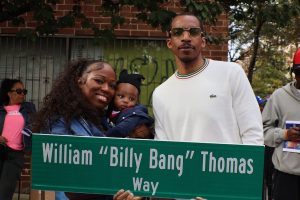 “It’s tricky in life to find your passion,” said son Golden (far right). “But after my father ended up paralyzed in a wheelchair, he found his purpose.”
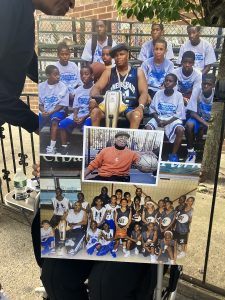 A collage represented many of William Thomas’ achievements in the community.
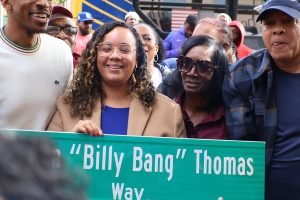 “He coached hundreds of young people over decades across our community,” said Councilmember Carmen De La Rosa.
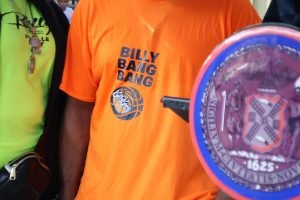 A t-shirt bore Thomas’s nickname.
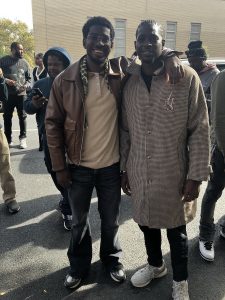 Brothers Malik (right) and Jalin Suber were among the many former youth players who kept in touch. “I know his son, his family, and I cried at his funeral,” said Malik. “I was one of the pall bearers.”
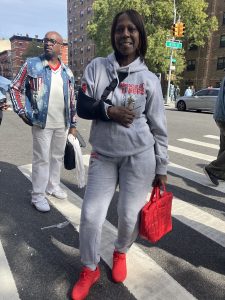 “The children just loved him and adored him,” said Pamela Mecca.
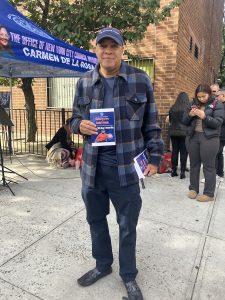 “What he always instilled in me is being the type of man who is accountable, and to be able to nurture and help others,” recalled Sye Dean.
 “He did in three weeks what I couldn’t do in years,” said long-time friend Eric Harris.
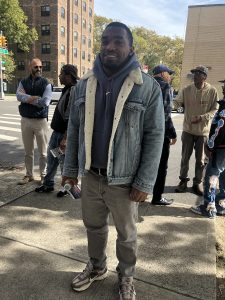 “People from all five boroughs would come and work out with him,” said Darrius Brown, who met the coach when he was 10 years old.
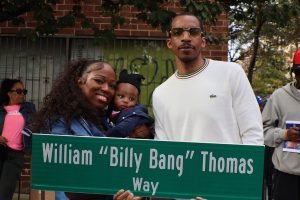 “En la vida es difícil encontrar tu pasión”, dijo su hijo Golden (extremo derecho). “Pero después de que mi padre quedara paralizado en una silla de ruedas, encontró su propósito”.
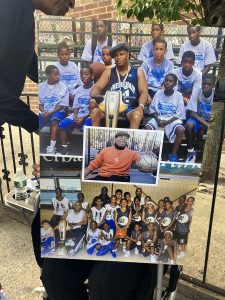 Un collage representaba muchos de los logros de William Thomas en la comunidad.
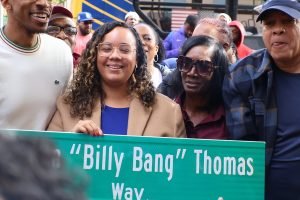 “Entrenó a cientos de jóvenes durante décadas en nuestra comunidad”, dijo la concejal Carmen De La Rosa.
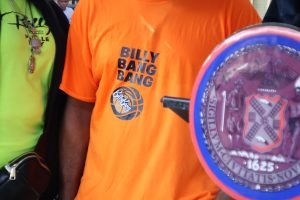 Una camiseta llevaba el apodo de Thomas.
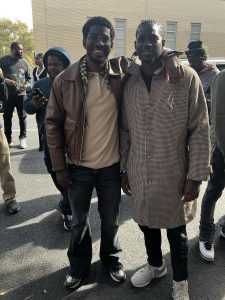 Los hermanos Malik (derecha) y Jalin Suber estaban entre los muchos exjugadores juveniles que se mantuvieron en contacto. “Conozco a su hijo, a su familia, y lloré en su funeral”, dijo Malik. “Fui uno de los portadores del féretro”.
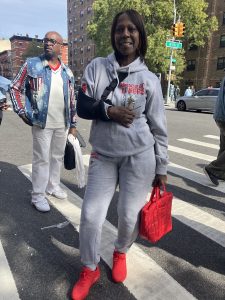 “Los niños lo querían y lo adoraban”, dijo Pamela Mecca.
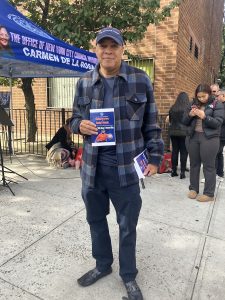 “Lo que siempre me inculcó fue ser un hombre responsable y capaz de apoyar y ayudar a los demás”, recordó Sye Dean.
 “Logró en tres semanas lo que yo no pude hacer en años”, dijo su viejo amigo Eric Harris.
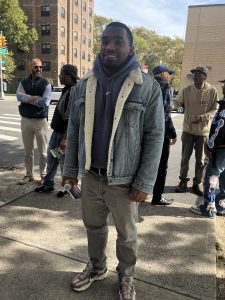 “Gente de los cinco condados venía a entrenar con él”, dijo Darrius Brown, quien conoció al entrenador cuando tenía 10 años.


