
¿Cuánta agua deberías beber al día?
Una experta explica cómo determinar cuánta agua necesitamos diariamente y por qué es importante mantenerse hidratado
How Much Water Should You Drink in a Day? An expert explains how to determine how much water we need daily, and why it’s important to stay hydrated By HealthMatters, Dorothy Cucci | NewYork-Presbyterian Water is an essential component to our health and many of our body’s functions, including helping regulate body temperature and lubricating joints. Our brain, heart, kidney, and lungs are each composed of about 70% to 80% water. And yet data from Carnegie Mellon University’s CivicScience division found that almost half of Americans drink three glasses or fewer of water a day. So how much water should we be drinking? Is there science behind aiming for eight glasses a day? To help understand the importance of hydration and how to determine the amount of water we should be taking in, Health Matters spoke to Dr. Judy Tung, an internal medicine physician at NewYork-Presbyterian/Weill Cornell Medical Center. She also explains how to spot the signs of dehydration and if liquids other than plain water are as effective at keeping you hydrated. Why is drinking enough water daily important? Water is an essential component in helping our body work properly. How much water should we drink in a day? The advice of eight glasses a day, which is roughly two liters, is a good benchmark to keep in mind, but it really varies for each individual. There’s also a small difference between women and men due to size differences and energy expenditure. Men probably need closer to three and a half to four liters a day. Women probably need closer to two and a half to three liters of water a day, and if you’re menstruating, pregnant, or lactating, you’ll need to drink more. How much water you should intake also depends in part on how much you are losing. We can lose water through our skin when we have a fever, have burns, or are sweating in hot weather. People often forget that you’re also losing from your respiratory system; the air that you breathe out is moisturized. If you’re exercising or breathing fast, you’re exhaling more water. You can also lose water from your stool, if you have diarrhea or any kind of bowel condition, as well as through your urination. Diuretic medication, used to treat certain heart conditions, as well as beverages that contain caffeine such as coffee, tea, or energy drinks, cause you to urinate more frequently. Under these circumstances, urinating more shouldn’t be mistaken for being adequately hydrated. What causes people to feel thirsty? The feeling of thirst is triggered by a hormone from the kidney and the brain that tells the body that it needs more blood volume or that the blood is too concentrated. So, in some ways, thirst tells you to replete what’s being lost. But the sensation of thirst is also highly variable. For example, older people may not get thirsty as often. If you’ve had coffee or alcohol, or are on medications that cause dry mouth, you may feel thirstier. Listen to your body because that’s your first clue that you need more fluid. Try not to suppress the sensation of thirst by chewing gum. Instead, drink water. If a person is spending a long time outside on a very hot day, how much water should they drink to stay healthy, and how often? My advice is to keep a water bottle next to you and take sips out of it every half hour or so. What are signs of dehydration, and when should you seek treatment? Moderate to severe dehydration can cause dizziness when you change position (sitting to standing), difficulty concentrating or thinking, and no urine. Patients with these symptoms should seek treatment and are usually given IV fluids. Are there situations in which people should restrict water intake? Patients with congestive heart failure and kidney or liver disease should get tailored advice from their doctor, since they tend to retain fluid and have a hard time managing their fluid circulation and volume. Alternatively, are there any health conditions which require people to drink more water? Are electrolyte drinks more hydrating than plain water? What about other fluids? There’s a case for electrolyte drinks if you’re experiencing bad gastrointestinal illness or doing very strenuous exercise – as long as you don’t overdo the sugar, especially if you have diabetes or prediabetes. If you need to replenish some of your electrolytes or your energy levels, something with a little bit of sugar and a little bit of salt may help. But again, in general, if you’re eating a normal diet the kidneys will regulate that on their own. Drinking plain water is the best way to hydrate, but for people who don’t like the taste or prefer seltzer, low sugar flavorings or a little fizz are great options. For people who love milk, I think it’s fine as long as you don’t have to worry about the fat or carbs in milk. Iced black tea can provide some hydration, but it does contain caffeine so just be aware you may get some diuresis. Because they are diuretics, it’s hard to say whether coffee, tea, or alcohol negate the hydration from the fluid you are consuming; but it’s safe to say that they don’t fully count as one of those eight glasses of water. For more information, please visit nyp.org/healthmatters or call NewYork-Presbyterian at 877-697-9355. ¿Cuánta agua deberías beber al día? Una experta explica cómo determinar cuánta agua necesitamos diariamente y por qué es importante mantenerse hidratado Por HealthMatters, Dorothy Cucci | NewYork-Presbyterian El agua es un componente esencial de nuestra salud y de muchas de las funciones de nuestro organismo, como ayudar a regular la temperatura corporal y lubricar las articulaciones. El cerebro, el corazón, los riñones y los pulmones están compuestos de un 70% a un 80% de agua. Sin embargo, según datos recientes, casi la mitad de los estadounidenses beben tres vasos de agua al día o menos. Entonces, ¿cuánta agua deberíamos beber? ¿Existe algún fundamento científico que justifique el objetivo de beber ocho vasos al día? Para ayudar a comprender la importancia de la hidratación y cómo determinar la cantidad de agua que deberíamos ingerir, Health Matters habló con la Dra. Judy Tung, internista del NewYork-Presbyterian/Centro Médico Weill Cornell. También nos explica cómo detectar los signos de deshidratación y si los líquidos distintos al agua son igual de eficaces para mantenernos hidratados. ¿Por qué es importante beber suficiente agua al día? Siempre recuerdo a los pacientes que al menos el 60% de su peso corporal total es agua. El agua en el sistema circulatorio ayuda a mantener la presión arterial, lo que garantiza que el cerebro y otros órganos vitales reciban una adecuada irrigación sanguínea. Una buena circulación también mantiene la temperatura corporal normal y elimina las bacterias, otros patógenos y toxinas del organismo. La hidratación también es importante para la elasticidad de la piel y como lubricante de las articulaciones. Por último, una cantidad adecuada de líquido en los intestinos facilita la eliminación de las heces. El agua es un componente esencial para que nuestro organismo funcione correctamente. ¿Cuánta agua debemos beber al día? La cantidad de agua que debes ingerir también depende en parte de la cantidad que pierdes. Podemos perder agua a través de la piel cuando tenemos fiebre, quemaduras o sudamos cuando hace calor. La gente suele olvidar que también se pierde por el sistema respiratorio: el aire que exhalamos está hidratado. Si haces ejercicio o respiras rápido, exhalas más agua. También puede perder agua por las heces, si tiene diarrea o algún tipo de afección intestinal, así como a través de la orina. Los medicamentos diuréticos, utilizados para tratar ciertas afecciones cardiacas, y las bebidas que contienen cafeína, como el té, el café, o las bebidas energéticas, hacen que orine con más frecuencia. En estas circunstancias, orinar más no debe confundirse con estar adecuadamente hidratado. ¿Qué provoca la sensación de sed? La sensación de sed la desencadena una hormona del riñón y del cerebro que indica al organismo que necesita más volumen de sangre o que ésta está demasiado concentrada. Así que, en cierto modo, la sed te dice que repongas lo que se está perdiendo. Pero la sensación de sed también es muy variable. Por ejemplo, las personas mayores pueden no tener sed tan a menudo. Si ha tomado café o alcohol, o está tomando medicamentos que provocan sequedad bucal, puede sentir más sed. Escuche a su cuerpo porque ésa es la primera pista de que necesita más líquido. Evite suprimir la sensación de sed mascando chicle. Mejor, beba agua. Si una persona pasa mucho tiempo al aire libre en un día muy caluroso, ¿cuánta agua debe beber para mantenerse sana y con qué frecuencia? Una regla general segura es duplicar la ingesta normal de líquidos. Si el cuerpo está bien hidratado, lo normal es orinar cada tres o cuatro horas, y el color debe ser amarillo limón. Si lleva seis horas tumbado en la playa y todavía no siente la necesidad de orinar, es señal de que los riñones están intentando retener toda el agua que pueden, por lo que tendrá que beber más agua en esa situación. Mi consejo es que siempre tenga una botella de agua a la mano y beba sorbos cada media hora aproximadamente. ¿Cuáles son las señales de deshidratación y cuándo hay que buscar tratamiento? Los signos de deshidratación leve incluyen labios y boca secos, ojos hundidos, piel ” tensa” (cuando la pellizca y no se vuelve a aplanar), sed, fatiga, dolor de cabeza y orina escasa. La deshidratación de moderada a grave puede causar mareos al cambiar de posición (de sentado a de pie), dificultad para concentrarse o pensar y ausencia de orina. Los pacientes con estos síntomas deben buscar tratamiento y suelen recibir líquidos por vía intravenosa. ¿Hay situaciones en las que se deba restringir la ingesta de agua? Es raro, pero hay pacientes con trastornos mentales que beben compulsivamente; pueden superar los 10 litros al día y acaban sobrediluyendo la sangre hasta un nivel peligroso. A veces acabamos hospitalizándolos por algo que se llama hiponatremia, es decir, bajo nivel de sal y exceso de agua. Los pacientes con insuficiencia cardíaca congestiva y enfermedades renales o hepáticas deben recibir consejos a la medida de parte de su médico, ya que tienden a retener líquidos y tienen dificultades para controlar su circulación y volumen. Por otra parte, ¿existen enfermedades que requieran beber más agua? Las personas con cálculos renales necesitan beber agua para eliminar los pequeños fragmentos del sistema urinario y evitar la formación de cálculos. Las embarazadas y las madres lactantes también necesitan más agua que el resto de la población. Yo les digo a mis pacientes que, cuando tienen fiebre, deben beber medio vaso más de agua por cada grado por encima de lo normal, es decir, que si tienen 38 grados centígrados de fiebre, deben beber dos vasos más. ¿Las bebidas con electrolitos hidratan más que el agua? Una dieta normal y un riñón sano proporcionan los electrolitos y el azúcar necesarios, por lo que normalmente no es necesario elegir bebidas con electrolitos en lugar de agua normal. Las bebidas con electrolitos pueden ser útiles en caso de enfermedad gastrointestinal grave o de ejercicio muy intenso, siempre que no se abuse del azúcar, sobre todo si se padece diabetes o prediabetes. Si usted necesita reponer algunos de sus electrolitos o sus niveles de energía, algo con un poco de azúcar y un poco de sal puede ayudar. Pero, de nuevo, en general, si sigue una dieta normal, los riñones lo regularán por sí solos. Beber agua sola es la mejor forma de hidratarse, pero para las personas a las que no les gusta el sabor o prefieren el agua de Seltz, los aromatizantes bajos en azúcar o un poco de efervescencia son opciones estupendas. Para las personas a las que les encanta la leche, creo que está bien siempre y cuando no deban preocuparse por la grasa o los carbohidratos de la leche. El té negro helado puede proporcionar algo de hidratación, pero contiene cafeína, así que debe tener en cuenta que puede sufrir algo de diuresis. Como son diuréticos, es difícil decir si el café, el té o el alcohol anulan la hidratación del líquido que consume, pero es seguro decir que no cuentan como uno de esos ocho vasos de agua. Para obtener más información, visite nyp.org/healthmatters o llame al NewYork-Presbyterian al 877-697-9355. Water is an essential component in helping our body work properly.
Photo: Shutterstock I always remind patients that at least 60% of their total body weight is water. Water in the circulatory system helps to maintain your blood pressure, which ensures your brain and other vital organs are adequately perfused with blood. Strong circulation also maintains normal body temperature and flushes bacteria, other pathogens, and toxins out of the body. Hydration is also important for skin elasticity and as a lubricant for the joints. Finally, adequate fluid in the intestines aids in the smooth elimination of stool.
 Dr. Judy Tung.
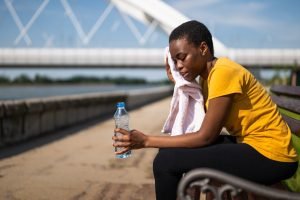 Water can be lost through our skin sweating in hot weather.
Photo: Shutterstock
Doubling your normal fluid intake is a safe rule of thumb. If your body is adequately hydrated, then you’ll usually urinate about every three to four hours, and the color should be lemon yellow. If you’ve been lying on the beach for six hours and you still don’t feel a need to pee, that’s definitely a sign that your kidneys are trying to hold onto as much water as it can, so you’ll need to drink more water in that situation. Be selective about electrolyte drinks as they are not always the most hydrating option, notes Dr. Tung.
Photo: Shutterstock
Signs of mild dehydration include dry lips and mouth, sunken eyes, “tented” skin (when you pinch it and it doesn’t flatten back down), thirst, fatigue, headache, and scant urine.
It’s rare, but there are patients with mental health disorders who compulsively drink; they can exceed 10 liters a day and end up over-diluting their blood to a dangerous level. We sometimes end up hospitalizing them for something called hyponatremia, which is low salt and excess water.
People with kidney stones need to drink water to flush out tiny fragments in their urinary system in order to prevent the buildup of a stone. Pregnant people, and people who are lactating, also need more water than the average person. I tell patients that when they have fever, they should drink an extra half cup of water for each degree above normal – so if they’re running a 102-degree Fahrenheit fever, that’s about two extra glasses.
A normal diet and a healthy kidney provide the necessary electrolytes and sugar, so it is not normally necessary to choose electrolyte drinks over regular water. El agua es un componente esencial para el correcto funcionamiento de nuestro cuerpo.
Foto: Shutterstock Dra. Judy Tung.El consejo de ocho vasos al día, lo que equivale aproximadamente a dos litros, es un buen punto de referencia a tener en cuenta, pero realmente varía en función de cada individuo. También hay una pequeña diferencia entre mujeres y hombres debido a las diferencias de tamaño y gasto energético. Los hombres probablemente necesiten entre tres litros y medio y cuatro litros al día. Las mujeres probablemente necesiten entre dos litros y medio y tres litros de agua al día, y si estás menstruando, embarazada o amamantando, necesitarás beber más.
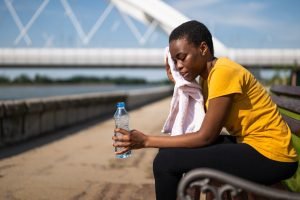 El agua se puede perder a través del sudor de la piel en alta temperaturas.
Foto: Shutterstock Sea selectivo con las bebidas con electrolitos, ya que no siempre son la opción más hidratante, señala la Dra. Tung.
Foto: Shutterstock


