
Chestnut Challenge
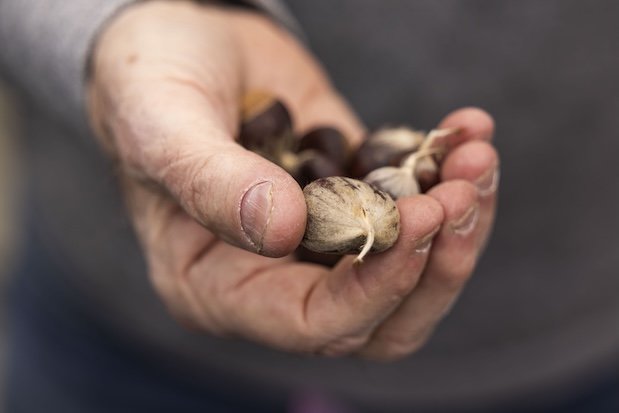
Chestnut Challenge
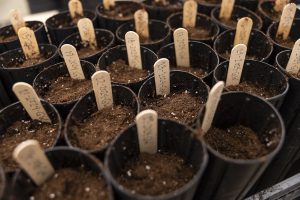 Get ready to dig in.
Blame the blight.
Before the emergence of chestnut blight, among the most abundant and productive trees in North America was the chestnut tree. The fungal disease kills the trees’ inner bark, thwarting the flow of nutrients and water to the leaves, flowers, and stems. Scientists estimate there were roughly four billion chestnut trees in the Eastern United States before the blight hit in the early twentieth century, making its disappearance a critical loss for regional forest ecosystems.
Now, the New York Restoration Project (NYRP) is partnering with chestnut conservationist Bart Chezar and The American Chestnut Foundation to help distribute American chestnut saplings throughout the five boroughs.
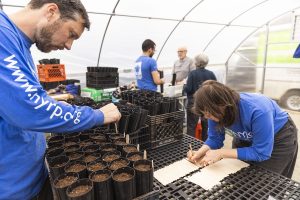
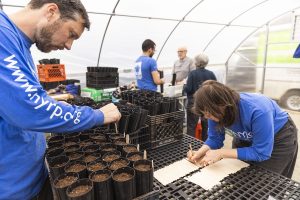 The effort is part of a long-term community science experiment.
Called the 1,000 Chestnut Challenge (nyrp.org/chestnut), the project’s goal is to eventually establish 1,000 thriving American chestnut trees throughout the local urban tree canopy with the help of committed volunteers.
“I am excited about this kick-off,” said Chezar. “As significant as this giveaway is, educating everyone about how important chestnuts and all trees are to New York City, but also how it fits into the overarching ‘challenge” of climate change, is our real purpose.”
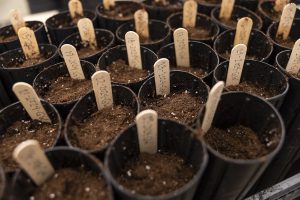
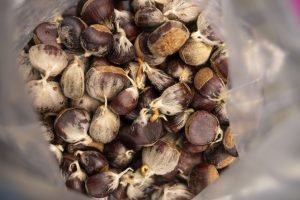 The hybrid American chestnut seedlings.
With the 1,000 Chestnut Challenge, NYRP seeks partner individuals and institutions to plant and monitor hybrid American chestnut seedlings as part of a long-term community science experiment.
The different seeds have a range of resistance to the chestnut blight, and the monitoring data collected will help identify resistant trees to collect seeds from in the future. This data will also help inform larger restoration efforts led by The American Chestnut Foundation.
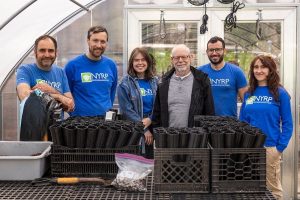 The New York Restoration Project (NYRP) is leading the effort.
Requirements to receive a tree include:
- A planting site in New York City capable of hosting a large tree. While selected recipients will receive a small sapling to plant, the goal is for it to grow into a large tree over time.
Note: Recipients must have permission to plant at their chosen site.
- A commitment to tree care during the first few years after planting, including any necessary weeding and occasional watering.
- An annual commitment to complete a brief survey on the health and size of the tree. NYRP will provide specific instructions on what and how to measure the tree once per year.
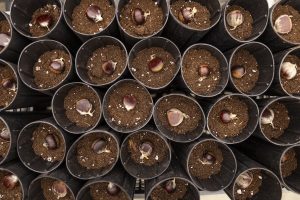 The project’s goal is to establish 1,000 thriving American chestnut trees locally.
NYRP has also planted more than 300 hybrid American chestnut trees in Northern Manhattan’s Highbridge Park. The endeavor is the largest urban experiment of its kind and part of the larger movement to help restore the American chestnut.
“In this time of staggering biodiversity loss and growing threats to the forests of the Eastern United States, the opportunity to bring the functionally extinct American chestnut to New York City is extremely important and gratifying,” said Jason Smith, NYRP Director of Northern Manhattan Parks. “We are grateful for the strong partnerships and dedicated volunteers who will help strengthen our local tree canopy.”
Interested volunteers can learn more and complete a registration form at nyrp.org/chestnut.
Desafío de castaños
 Prepárese para cavar.
La culpa es de la plaga.
Antes de la aparición de la plaga del castaño, uno de los árboles más abundantes y productivos de Norteamérica era el castaño. La enfermedad fúngica mata la corteza interna de los árboles, interrumpiendo el flujo de nutrientes y agua a las hojas, flores y tallos. Los científicos calculan que había unos 4,000 millones de castaños en el este de Estados Unidos antes de la plaga, a principios del siglo XX, por lo que su desaparición supuso una pérdida crítica para los ecosistemas forestales regionales.
 Esta iniciativa forma parte de un experimento científico comunitario a largo plazo.
Ahora, el Proyecto de Restauración de Nueva York (NYRP, por sus siglas en inglés) se ha asociado con el conservacionista Bart Chezar y la Fundación del Castaño Americano para ayudar a distribuir retoños de castaño estadounidense por los cinco condados.
El objetivo del reto de los mil castaños (nyrp.org/chestnut) es plantar mil castaños americanos sanos en todo el arbolado urbano local con la ayuda de voluntarios comprometidos.
“Estoy entusiasmado con esta iniciativa”, dijo Chezar. “Por muy importante que sea este regalo, educar a todo el mundo sobre la importancia de los castaños y de todos los árboles para la ciudad de Nueva York, pero también sobre cómo encaja en el “desafío” global del cambio climático, es nuestro verdadero propósito”.
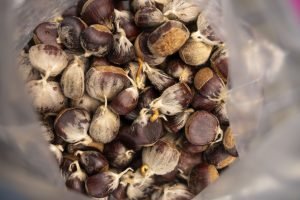 Las plantas híbridas de castaño americano.
Con el Desafío de los Mil Castaños, el NYRP busca personas e instituciones asociadas para plantar y supervisar híbridos de castaño americano como parte de un experimento científico comunitario a largo plazo.
Las diferentes semillas tienen un rango de resistencia a la plaga del castaño, y los datos de seguimiento recopilados ayudarán a identificar árboles resistentes de los cuales extraer semillas en el futuro. Además, esta información servirá de base para los esfuerzos de restauración de mayor envergadura que lleva a cabo la Fundación American Chestnut.
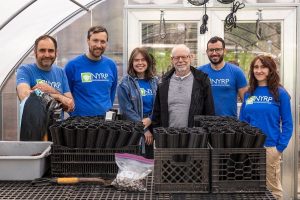 El Proyecto de Restauración de Nueva York (NYRP, por sus siglas en inglés) lidera esta iniciativa.
Los requisitos para recibir un árbol son los siguientes:
- Un lugar de plantación en la ciudad de Nueva York capaz de albergar un árbol de gran tamaño. Aunque los beneficiarios seleccionados recibirán un pequeño retoño para plantar, el objetivo es que con el tiempo se convierta en un gran árbol. Nota: Los beneficiarios deben tener permiso para plantar en el lugar elegido.
- El compromiso de cuidar los árboles durante los primeros años tras la plantación, incluyendo el deshierbe necesario y el riego ocasional.
- Un compromiso anual para completar una breve encuesta sobre la salud y el tamaño del árbol. El NYRP proporcionará instrucciones específicas sobre qué medir en el árbol, y cómo hacerlo, una vez al año.
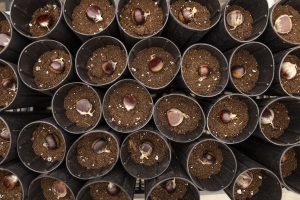 El objetivo del proyecto es plantar mil castaños americanos vivos en la zona.
El NYRP también ha plantado más de 300 castaños americanos híbridos en Highbridge Park, en el Alto Manhattan. Se trata del más grande experimento urbano de este tipo y forma parte de un movimiento más amplio para ayudar a restaurar el castaño americano.
“En esta época de asombrosa pérdida de biodiversidad y crecientes amenazas para los bosques del este de Estados Unidos, la oportunidad de traer a la ciudad de Nueva York el castaño americano, prácticamente extinto, es sumamente importante y gratificante”, dijo Jason Smith, director de Parques del Alto Manhattan del NYRP. “Estamos agradecidos por las fuertes alianzas y los voluntarios dedicados que ayudarán a fortalecer el dosel de nuestros árboles locales”.
Los voluntarios interesados pueden obtener más información y completar un formulario de inscripción en nyrp.org/chestnut.


