

The Spring Sniffles
What to Know About Seasonal Allergies
HealthMatters Publication, Julia Morrill | NewYork-Presbyterian
 As the seasons change and warmer weather arrives, many people may experience nasal congestion, watery eyes, and an itchy throat because of seasonal allergies.
About one in four adults in the U.S. suffer from symptoms of seasonal allergies, as well as one in five children.
Seasonal allergies are generally related to the life cycle of plants in the environment. In the spring, the pollen released from trees is the most abundant allergen. In the summer, grasses cause seasonal allergies, and in the fall, it’s ragweed.
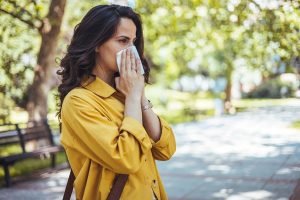 About one in four adults in the U.S. suffer from symptoms of seasonal allergies.
Photo: Shutterstock
“Spring allergies can significantly impact people’s quality of life,” says Dr. David A. Gudis, an otolaryngologist and chief of the Division of Rhinology and Anterior Skull Base Surgery at NewYork-Presbyterian/Columbia University Irving Medical Center. “When the weather is gorgeous and the trees are blooming and kids want to run and play, we all want to be outdoors. It’s much harder when suffering from allergies. Today, there are great treatment options to alleviate allergy symptoms.”
While seasonal allergy symptoms are typically associated with a stuffy nose and itchy eyes, Dr. Gudis says they can also affect sleep, attention and memory.
To learn more about why people develop seasonal allergies, how to prevent them, and if allergy seasons are getting worse, Health Matters spoke to Dr. Gudis.
 Dr. David A. Gudis.
What are seasonal allergies?
Seasonal allergies are the immune system responding to something in the environment as though it were a threat. Everyone has immune cells throughout the body to protect us from infection — including on the surface of our eyes, our skin, and the lining of our nose, mouth, and airway. When something like pollen triggers one of the cells in an allergic patient, the body mistakenly treats it like a threat. The immune cells react with an inflammatory cascade as though they must respond, react, and fight. Thus, a massive and robust allergic reaction begins.
What are the seasonal allergy symptoms?
The allergic response, which is a form of inflammation, can cause lots of very uncomfortable symptoms for patients — itching, sneezing, watery eyes, nasal discharge, itchy throat, and eczema are common. People suffering from seasonal allergies can also feel fatigued and even notice difficulty focusing.
Do seasonal allergies have a mental health impact too?
Allergies are associated with changes in mood. When sleep is impaired, memory and attention can suffer as well. Allergic swelling in the nose can reduce the sense of smell, and believe it or not, a lasting poor sense of smell is associated with feelings of isolation and other mood changes. Lastly, allergies are associated with anxiety. All of these complex relationships can have an impact on mental health.
 ‘Tis the season.
Photo: Shutterstock
Why do people develop seasonal allergies?
It’s not entirely understood. Seasonal allergies equally affect all socioeconomic groups, races, ethnicities, and demographic groups, but the climate and environment in which one grows up can significantly impact the risk of developing allergies. The type of inflammation that causes allergies can also run in families. If someone’s parents have allergies, the child is much more likely to end up with allergies as well.
Is it normal to develop allergies later in life, even if you’ve never had them before?
Yes. A lot of patients say that they never had allergies until they moved to New York City, or a new apartment, and all of a sudden, things change. The immune system also changes over the course of our lives, and as a result, some people may become more symptomatic as they age.
Is allergy season getting worse?
Allergy seasons are getting longer, and they’re getting worse, likely secondary to changes in the climate and environment. Pollen counts and other markers of allergy triggers are higher than they used to be, and the duration of allergy season has increased. These changes could represent another reason that seasonal allergies are more common or affecting people more severely than they used to.
Are there ways to prevent seasonal allergies?
The first step is to try to avoid allergens. During those first few weeks of spring, when pollen counts are high, consider spending more time inside with air conditioning and an air purifier rather than keeping the windows open. It’s helpful to dust and vacuum regularly and make sure bedsheets are changed and washed regularly. I also tell patients always to shower before bed so that they’re not spending all night rolling around in the pollen and other allergens that they may have accumulated over the course of the day.
What medications can treat seasonal allergies?
Over-the-counter medications can significantly improve seasonal allergy symptoms. Nasal steroid sprays, nasal antihistamine sprays and oral antihistamines are very effective at helping patients feel better. For people who suffer every allergy season, I recommend starting the medications before symptoms begin, as it may be easier to prevent inflammation than try to treat it after it’s severe.
 Over-the-counter medications – and some natural remedies – may significantly improve symptoms.
Photo: Shutterstock
What if medications are not enough?
If allergies are significantly impacting your quality of life and over-the-counter treatments are not enough, it’s definitely worth seeing a doctor. Allergy testing and immunotherapy or allergy shots can significantly help with your symptoms.
For more, visit https://healthmatters.nyp.org.
Estornudos primaverales
Lo que hay que saber sobre las alergias estacionales
Publicación de HealthMatters, Julia Morrill | NewYork-Presbyterian
Con el cambio de estación y la llegada del calor, muchas personas pueden sufrir congestión nasal, lagrimeo y picor de garganta a causa de las alergias estacionales. Aproximadamente uno de cada cuatro adultos en los Estados Unidos padece síntomas de alergias estacionales, así como uno de cada cinco niños.
Este tipo de alergias suelen estar relacionadas con el ciclo vital de las plantas del entorno. En primavera, el polen que desprenden los árboles es el alérgeno más abundante. En verano, las gramíneas provocan alergias estacionales, y en otoño, la ambrosía.
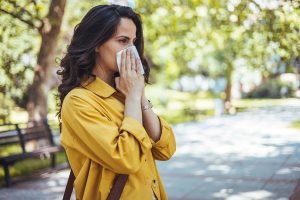 Aproximadamente uno de cada cuatro adultos en EE. UU. sufre síntomas de alergias estacionales.
Foto: Shutterstock
“Las alergias primaverales pueden afectar considerablemente a la calidad de vida de las personas”, afirma el Dr. David A. Gudis, otorrinolaringólogo y jefe de la División de Rinología y Cirugía Anterior de la Base del Cráneo del Centro Médico Irving de la Universidad de Columbia/Nueva York-Presbyterian. “Cuando hace buen tiempo y los árboles florecen y los niños quieren correr y jugar, todos queremos estar al aire libre. Es mucho más difícil cuando se padecen alergias. Hoy en día, hay grandes opciones de tratamiento para aliviar sus síntomas”.
Si bien los síntomas de la alergia estacional suelen asociarse con nariz congestionada y picor de ojos, el Dr. Gudis afirma que también pueden afectar al sueño, la atención y la memoria. Para saber más sobre por qué las personas desarrollan alergias estacionales, cómo prevenirlas y si las temporadas de alergias están empeorando, Health Matters habló con el Dr. Gudis.
 Dr. David A. Gudis.
¿Qué son las alergias estacionales?
Las alergias estacionales son la respuesta del sistema inmune a algo en el ambiente como si fuera una amenaza. Todo el mundo tiene células inmunitarias en todo el cuerpo para protegernos de las infecciones, incluso en la superficie de los ojos, la piel y el revestimiento de la nariz, la boca y las vías respiratorias. Cuando algo como el polen desencadena una de las células en un paciente alérgico, el cuerpo lo trata erróneamente como una amenaza. Las células inmunitarias reaccionan con una cascada inflamatoria como si tuvieran que responder, reaccionar y luchar. Así comienza una reacción alérgica intensa y masiva.
¿Cuáles son los síntomas de la alergia estacional?
La respuesta alérgica, que es una forma de inflamación, puede provocar muchos síntomas muy molestos para los pacientes: picor, estornudos, ojos llorosos, secreción nasal, picor de garganta y eccemas son habituales. Las personas que sufren alergias estacionales también pueden sentirse fatigadas e incluso notar dificultades para concentrarse.
¿Las alergias estacionales también afectan la salud mental?
Las alergias están asociadas con cambios en el estado de ánimo. Cuando el sueño se ve afectado, la memoria y la atención también pueden resentirse. La inflamación alérgica de la nariz puede reducir el sentido del olfato y, aunque parezca mentira, un mal sentido del olfato duradero se asocia con sentimientos de aislamiento y otros cambios de humor. Por último, las alergias están asociadas a la ansiedad. Todas estas complejas relaciones pueden repercutir en la salud mental.
 Llegó la temporada.
Foto: Shutterstock
¿Por qué se desarrollan las alergias estacionales?
No se entiende del todo. Las alergias estacionales afectan por igual a todos los grupos socioeconómicos, razas, etnias y grupos demográficos, pero el clima y el entorno en el que uno crece pueden influir significativamente en el riesgo de desarrollar alergias. El tipo de inflamación que causa las alergias también puede ser hereditario. Si los padres de alguien son alérgicos, es mucho más probable que el hijo también acabe siéndolo.
¿Es normal desarrollar alergias más adelante en la vida, aunque nunca se hayan tenido antes?
Sí. Muchos pacientes dicen que nunca tuvieron alergias hasta que se mudaron a la ciudad de Nueva York, o a un nuevo apartamento, y de repente, las cosas cambiaron. El sistema inmunitario también cambia a lo largo de nuestra vida y, como consecuencia, algunas personas pueden presentar más síntomas a medida que envejecen.
¿Está empeorando la temporada de alergias?
Las temporadas de alergia se están alargando y empeorando, probablemente como consecuencia de los cambios climáticos y medioambientales. Las concentraciones de polen y otros indicadores de desencadenantes de alergias son mayores que antes, y la duración de la temporada de alergias ha aumentado. Estos cambios podrían ser otra de las razones por las que las alergias estacionales son más frecuentes o afectan a las personas de forma más grave que antes.
¿Existen formas de prevenir las alergias estacionales?
El primer paso es intentar evitar los alérgenos. Durante las primeras semanas de primavera, cuando el recuento de polen es alto, considere la posibilidad de pasar más tiempo en el interior con aire acondicionado y un purificador de aire en lugar de mantener las ventanas abiertas. Es útil quitar el polvo y pasar la aspiradora con regularidad y asegurarse de que las sábanas se cambian y lavan con regularidad. También les digo a los pacientes que se duchen siempre antes de acostarse para que no se pasen toda la noche revolcándose en el polen y otros alérgenos que puedan haber acumulado a lo largo del día.
 Los medicamentos sin receta, y algunos remedios naturales, pueden mejorar significativamente los síntomas.
Foto: Shutterstock
¿Qué medicamentos pueden tratar las alergias estacionales?
Los medicamentos sin receta pueden mejorar significativamente los síntomas de la alergia estacional. Los esteroides nasales en aerosol, los antihistamínicos nasales en aerosol y los antihistamínicos orales son muy eficaces para ayudar a los pacientes a sentirse mejor. A las personas que sufren cada temporada de alergias, les recomiendo empezar a tomar los medicamentos antes de que empiecen los síntomas, ya que puede ser más fácil prevenir la inflamación que intentar tratarla cuando ya es grave.
¿Y si los medicamentos no son suficientes?
Si las alergias están afectando significativamente su calidad de vida y los tratamientos de venta libre no son suficientes, definitivamente vale la pena ver a un médico. Las pruebas de alergia y la inmunoterapia o inyecciones antialérgicas pueden ayudar a aliviar los síntomas.
Para más información, visite https://healthmatters.nyp.org.


