
Modernización en el Metro
Nueva rampa y mejoras para la estación de metro de Harlem

Uptown Upgrade New ramp and upgrades for Harlem subway station By Sherry Mazzocchi Photos: MTA It is the only subway line above 125th St. that serves East Harlem. And now, riders on the Number 3 line, which ends at the Harlem-148th St. subway station, are going to encounter a major upgrade. Construction is underway for a new ramp. Soon passengers with wheelchairs, strollers, rolling suitcases and all manner of considerations will find traveling much easier. The ramp is already about 80 percent complete, and should be open in April of 2026, according to Quemuel Arroyo, MTA Chief Accessibility Officer. Ramps, he said, have distinct advantages over elevators. “[They] will always be accessible. You’re never going to have any maintenance requirements. It’s not going to break down. It’s not going to go out of service. This ramp will deliver full access to every rider at the end of this line, and that’s going to be great,” Arroyo said. Ramps, unlike elevators, are also much easier to keep clean and typically don’t accumulate refuse or litter that can present a fire risk – or create foul smells. A temporary staircase will be open in a few weeks. The current one will undergo demolition and a new entry will be installed, allowing both access to the ramp as well as stairs leading to the platform. The ramp will be six feet wide and have handrails, said Maher Mahmoud, the project’s construction manager. The ramp will be made of concrete. Passengers getting off the train can access the ramp at about the middle of the platform. In addition to some new artwork, the station will also get a new CCTV system and an improved speaker system. All of the conduits, that are currently above the ramp area will be removed and replaced. “All the electrical and communication systems are going to be upgraded here,” Mahmoud said. One of the most challenging things about renovating the station is that it has to be done while people are using it, he said. The construction team has built an impressive temporary barricade on both the platform and overhead to separate workers from passengers. “We have to make sure that we have enough room for the public to walk on the platform to get safely to the trains. There’s a very narrow allowance,” he said. The Harlem-148th St. subway station is located just under the Fredrick Douglass Academy. It is the end point for the Number 3, or IRT Lenox Ave. subway line, serving a wide swath of Northern Manhattan, particularly as the only subway line above 125th St. that serves East Harlem. The station, which is actually on 149th Street, opened in 1968, before the Americans with Disabilities Act (ADA) of 1990 went into effect. Like much of New York City’s transit system, the station was not built for people with wheelchairs. As of January 2025, only about 32 percent of the city’s 472 stations were ADA compliant. The MTA plans to make every station ADA compliant, said Arroyo, but it takes time, and of course, money. “We have a capital plan. That’s when we lay out what stations we do, the station selections. We do a robust community engagement in every borough, we prioritize stations based on foot traffic, ridership and, of course, geographic coverage,” said Arroyo. “This has been in the works for several years. We say that it takes about three to five years from when the money is earmarked to when those ramps or access elevators open.” The station’s location and depth make a ramp the optimal choice. Unlike many other Northern Manhattan stations on the A and 1 lines, the Harlem-148th St stop is not very deep. It is also built just below a school, making an elevator impractical, if not impossible, due to the lack of headroom, said Mahmoud. Arroyo said a conservative cost estimate for subway elevator installation is between $20 to $25 million. He added that when the construction involves moving significant infrastructure, costs can balloon. The MTA did not breakdown the exact cost of installing the ramp, saying their budget is for making 13 stations ADA compliant. Of those 13 stations, three are getting ramps, the rest are getting elevators. Money from the congestion pricing initiative, implemented this summer, is the source of some of the funds, said Assemblyman Al Taylor, who represents the district. “That’s why I stood up for congestion pricing,” he said. “Because if you put the money where we need it, we can get stuff like this.” Taylor added that he was not, however, in favor of a fare increase. “But I do support 1,000 percent congestion pricing,” he said. “That guy down somewhere else, I think in Washington, can’t stop the flow, because people, if you give them what they want, it’s working,” he said about attempts from the deferral government to discontinue congestion pricing. “It ain’t broke. So why you trying to fix it? Congestion pricing makes sense here. Look at the benefits.” While putting in a ramp might seem uncomplicated, MTA projects can come with unforeseen issues. “Concrete is usually relatively straightforward,” said Antonio Rosciglione, Senior Project manager and Vice President of AECOM, the company facilitating the station upgrade. The more intricate part is the conduit replacement and upgrade. All of the work serves a greater good, Rosciglione said. “This is a terminus station, so for someone to come here on a wheelchair or needing a ramp, this is going to be a huge relief for them, rather than, from what we understand, taking a bus down a stop or two, or arranging a ride share,” he said. “This is just huge help for those individuals that need it. That’s the greatest benefit. It’s going to help more people get more access.” For more, visit mta.info. Modernización en el Metro Nueva rampa y mejoras para la estación de metro de Harlem Por Sherry Mazzocchi Es la única línea de metro por encima de la calle 125 que da servicio a East Harlem. Y ahora, los pasajeros de la línea 3, que termina en la estación de metro Harlem-Calle 148, se encontrarán con una importante mejora. Se está construyendo una nueva rampa, y, pronto, los pasajeros con sillas de ruedas, coches, carriolas, maletas con ruedas y todo tipo de elementos similares encontrarán mucho más fácil sus desplazamientos. La rampa ya está completada en un 80% y debería estar abierta en abril de 2026, según Quemuel Arroyo, director de accesibilidad de la MTA. Las rampas, dijo, tienen claras ventajas sobre los ascensores. “Siempre serán accesibles. Nunca necesitarán mantenimiento. No se estropearán. No dejarán de funcionar. Esta rampa ofrecerá acceso completo a todos los pasajeros de esta línea, y eso será estupendo”, afirmó Arroyo. Las rampas, a diferencia de los ascensores, también son mucho más fáciles de mantener limpias y normalmente no acumulan residuos ni basura que puedan presentar un riesgo de incendio o crear malos olores. En unas semanas se abrirá una escalera provisional. La actual, será demolida y se instalará una nueva entrada, que dará acceso tanto a la rampa como a las escaleras que conducen a la plataforma. La rampa tendrá seis pies de ancho y contará con barandillas, dijo Maher Mahmoud, director de obra del proyecto. La rampa será de hormigón. Los pasajeros que bajen del tren podrán acceder a la rampa aproximadamente en el centro de la plataforma. Además de algunas obras de arte nuevas, la estación también contará con un nuevo sistema de CCTV y un sistema de altavoces mejorado. Todo el cableado eléctrico que se encuentra actualmente sobre la zona de la rampa será retirado y sustituido. “Todos los sistemas eléctricos y de comunicaciones se van a actualizar”, afirmó Mahmoud. Una de las cosas más difíciles de la renovación de la estación es que hay que hacerla mientras la gente la utiliza, dijo. El equipo de construcción ha construido una impresionante barrera temporal tanto en el andén como en la parte superior para separar a los trabajadores de los pasajeros. “Tenemos que asegurarnos de que hay suficiente espacio para que el público pueda caminar por el andén y llegar de forma segura a los trenes. Hay muy poco margen”, afirmó. La estación de metro Harlem-Calle 148 St se encuentra justo debajo de la Academía Fredrick Douglass. Es el punto final de la línea 3, o IRT Lenox Ave., que da servicio a una amplia zona del Alto Manhattan, siendo la única línea de metro por encima de la calle 125 que da servicio a East Harlem. La estación, que actualmente se encuentra en la calle 149, fue inaugurada en 1968, antes de que entrara en vigor la Ley de Estadounidenses con Discapacidades (ADA, por sus siglas en inglés) de 1990. Al igual que gran parte del sistema de transporte público de la ciudad de Nueva York, la estación no fue construida para personas en silla de ruedas. En enero de 2025, solo alrededor del 32% de las 472 estaciones de la ciudad cumplían con la ADA. La MTA tiene previsto adaptar todas las estaciones a la ADA, según Arroyo, pero esto lleva tiempo y, por supuesto, dinero. “Tenemos un plan maestro. En él establecemos qué estaciones vamos a reformar, la selección de estaciones. Llevamos a cabo una sólida participación comunitaria en cada condado, priorizamos las estaciones en función del tráfico peatonal, el número de pasajeros y, por supuesto, la cobertura geográfica”, dijo Arroyo. “Esto lleva varios años en marcha. Calculamos que se necesitan entre tres y cinco años desde que se asignan los fondos hasta que se inauguran las rampas o los ascensores de acceso”. La ubicación y la profundidad de la estación hacen que una rampa sea la opción óptima. A diferencia de muchas otras estaciones del norte de Manhattan en las líneas A y 1, la parada de Harlem-Calle 148 no es muy profunda. Además, está construida justo debajo de una escuela, lo que hace que un ascensor sea poco práctico, si no imposible, debido a la falta de altura libre, dijo Mahmoud. Arroyo dijo que una estimación conservadora del costo de la instalación de un ascensor en el metro oscila entre $20 y $25 millones de dólares. Añadió que cuando la construcción implica mover una infraestructura importante, los costos pueden dispararse. La MTA no desglosó el costo exacto de la instalación de la rampa, señalando que su presupuesto es para que 13 estaciones cumplan con la ADA. De esas 13 estaciones, tres recibirán rampas y el resto, ascensores. El dinero procedente del peaje por congestión del tránsito, implementado este verano, es la fuente de algunos de los fondos, dijo el asambleísta Al Taylor, que representa al distrito. “Por eso defendí el peaje por congestión”, dijo. “Porque si se invierte el dinero donde se necesita, se pueden conseguir cosas como esta”. Taylor añadió que, no estaba a favor de un aumento de las tarifas. “Pero apoyo al 1000 % el peaje ir congestión de tránsito”, afirmó. “Ese tipo de algún otro sitio, creo que, de Washington, no puede detener el flujo, porque a la gente, si le das lo que quiere, le funciona”, comento Taylor sobre los intentos del gobierno federal de descontinuar los precios de congestión. “Si no está roto, ¿por qué intentar arreglarlo? El peaje por congestión de tránsito tiene sentido aquí. Basta con ver los beneficios”. Aunque la instalación de una rampa puede parecer simple, los proyectos de la MTA pueden presentar problemas imprevistos. “El hormigón suele ser relativamente sencillo”, afirmó Antonio Rosciglione, director sénior de proyectos y vicepresidente de AECOM, la empresa que facilita las obras de mejora de la estación. La parte más compleja es la sustitución y mejora de los conductos. Todo el trabajo sirve para un bien mayor, afirma Rosciglione. “Esta es una estación terminal, por lo que para alguien que viene aquí en silla de ruedas o necesita una rampa, esto va a ser un gran alivio, en lugar de, según entendemos, tomar un autobús una o dos paradas más allá, u organizar un viaje compartido”, dijo. “Esto supone una gran ayuda para las personas que lo necesitan. Esa es la mayor ventaja. Va a ayudar a más gente a tener más acceso”. Para más información, visite mta.info. 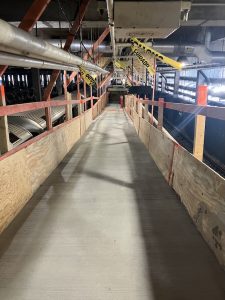 The new concrete ramp.
Photo: Sherry Mazzocchi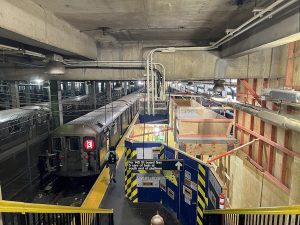 The Number 3 line ends at the Harlem-148th St. subway station.
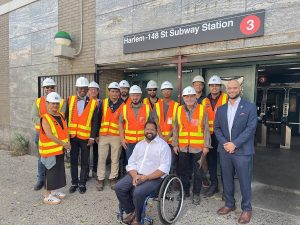 Elected and MTA officials, including Chief Accessibility Officer Quemuel Arroyo (center), gather together at the entrance of the station.
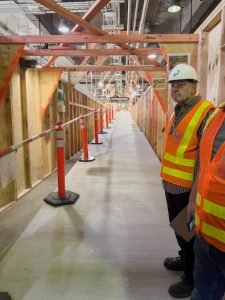 “This is just huge help for those individuals that need it,” said Antonio Rosciglione, Senior Project Manager.
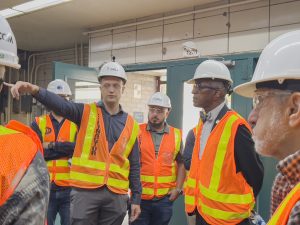 Assemblymember Al Taylor (right) takes the tour.
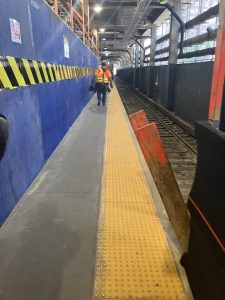 A narrow platform is open for riders to use while construction is underway.
Photo: Sherry Mazzocchi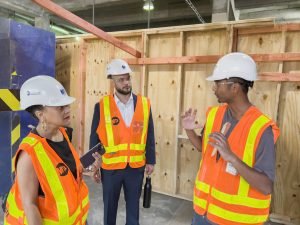 Wendy Olivo (far left) from Assemblymember Taylor’s office joins in the discussion.
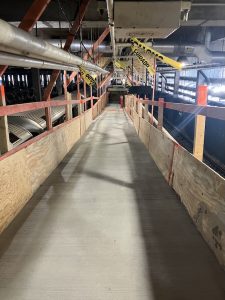 La nueva rampa de concreto.
Foto: Sherry Mazzocchi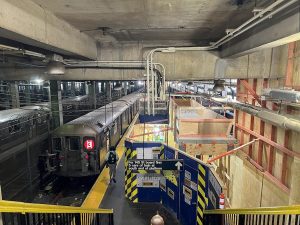 La línea 3 termina en la estación de metro Harlem-Calle 148.
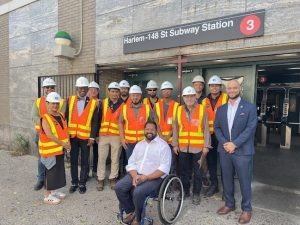 Funcionarios electos y oficiales de la MTA, incluyendo al director de Accesibilidad Quemuel Arroyo (centro), se reúnen en la entrada de la estación.
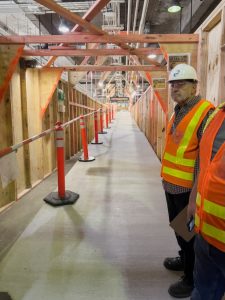 “Esto es una gran ayuda para quienes la necesitan”, dijo Antonio Rosciglione, Gerente Sénior de Proyecto.
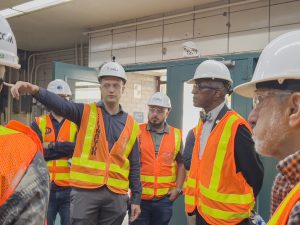 El asambleísta Al Taylor (derecha) realiza el recorrido.
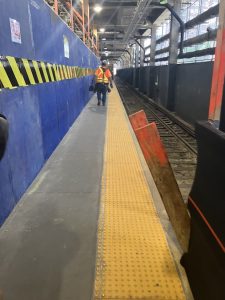 Una plataforma estrecha está abierta para el uso de los pasajeros mientras se realizan las obras.
Foto: Sherry Mazzocchi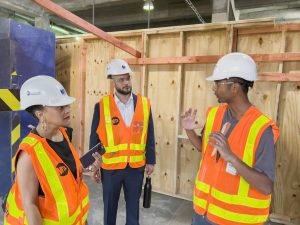 Wendy Olivo (extremo izquierdo), de la oficina del asambleísta Taylor, participa en la conversación.


